A wave of excitement washed over me as I disembarked from the bus in a secluded region of Canada. Little did I know, this moment would mark the beginning of an adventure that would shape my life and equip me with Wilderness First Aid skills to save others. The towering pines and snowcapped peaks seemed to whisper promises of challenge and discovery. I was about to embark on a four-month adventure tourism course that would push me to my limits and beyond.
First Wilderness Medicine Course
My first taste of wilderness medicine came during a grueling 10-day course in the dead of winter. You’re trudging through knee-deep snow on a frozen lake, searching for your partner who’s hidden somewhere, pretending to be injured. Your job? Find them, figure out what’s wrong, and treat them using only what you’ve got on you and what nature provides.
It was sink or swim, and boy, did we learn to swim fast.
I remember my first “patient”—a classmate who had tucked herself behind a snow-covered bush, feigning a broken leg and hypothermia. As I approached, my heart racing, I realized that all my textbook knowledge seemed to evaporate in the face of this simulated emergency. But as I began to assess the situation, asking questions and examining my “patient,” I felt a strange calm descend. This, I realized, was what it meant to be a wilderness first responder.
Over those 10 days, we faced scenario after scenario. From treating simulated snake bites in the freezing cold to performing cardiopulmonary resuscitation (CPR) on a mannequin while balanced on a steep slope, each challenge pushed us further out of our comfort zones. We learned to improvise splints from tree branches, to create shelter from nothing but snow, and to keep our cool when everything around us was chaotic.
Real-World Training Ground
Fast forward a bit, and I found myself in a tiny northern community, volunteering with the local fire and ambulance services. Talk about a crash course in emergency response! One day you’re treating heatstroke in the scorching summer; the next you’re dealing with frostbite in bone-chilling winters.
This experience drilled home a crucial point: in the wilderness, you’re the first and often only line of defense. There’s no hospital around the corner, no ambulance just minutes away. It’s all on you.
I’ll never forget my first real emergency call. It was a frigid winter night, and we got a call about a car accident on a remote stretch of highway. As we raced through the darkness, I mentally ran through everything I’d learned. When we arrived at the scene, the car was off the road, partially buried in snow. The driver was conscious but clearly in shock, with a nasty gash on his forehead.
As I approached the vehicle, I felt that same calm I’d experienced during my training descend over me. I introduced myself, began my assessment, and started treatment. It wasn’t until much later, after we’d transported the patient to the nearest hospital (a good two hours away), that I realized the enormity of what had happened. I’d faced a real emergency, in the middle of nowhere, and I’d been prepared.
The Wilderness Medic’s Mindset
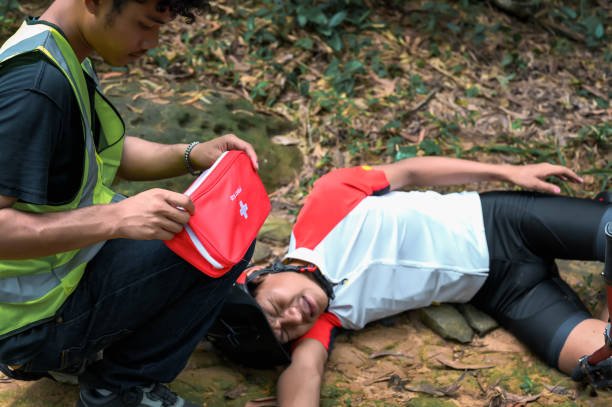
So, what does it take to be a wilderness medic? It’s more than just knowing how to slap on a bandage or set a splint. It’s about developing a particular way of thinking:
- Keep your cool when everything’s going haywire. Panic is contagious, and in the wilderness, it can be deadly. I’ve learned to take a deep breath, assess the situation, and then act decisively.
- Look at nature as your supply closet. That straight branch? That’s your splint. Those large leaves? Your bandages. When someone sprains an ankle on the trail, you might not have a full medical kit. But you can improvise, using trekking poles for support, spare clothing for compression wraps, or natural materials for splints. Learning to use what’s around you becomes second nature in wilderness survival.
- Think on your feet. Prioritize what needs attention now, and what can wait? In wilderness medicine, we use—airway, breathing, circulation, and deadly bleeding. This helps us focus on the most critical issues first.
- Plan for the long haul. Help might be hours or even days away. This means you need to think beyond just immediate treatment. How will you keep your patient warm? Hydrated? How will you move them if necessary?
Skills That Save Lives
Over the years, I’ve learned that certain skills are absolute gold in the backcountry:
Playing Detective with Injuries
First things first: figure out what’s wrong. Is it safe to approach? Is the person awake? Breathing? Bleeding? You’ve got to be part doctor, part detective.
I once assessed a hiker who had fallen on a trail. She was conscious but in pain. Through careful examination, I found she had bruised ribs. However, I also noticed signs of a mild concussion that weren’t obvious at first. This experience highlighted the importance of thorough assessment—the most visible injury isn’t always the only or most serious one
Treating Nature’s Nasties
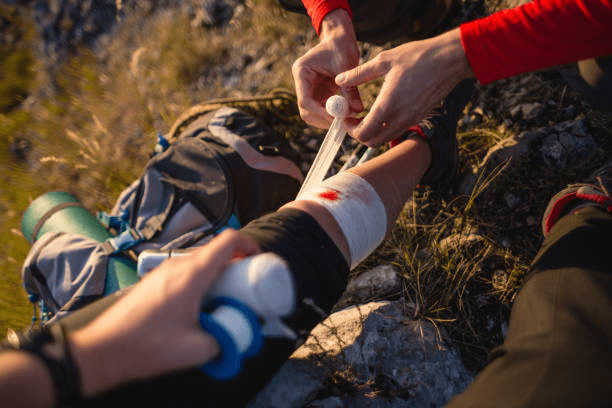
From cuts and sprains to breaks and burns, Mother Nature’s got a whole menu of potential injuries. Learning to treat these with limited supplies is an art form.
Cuts are common, but in the wilderness, even a small cut can become a big problem if it gets infected. I always carry alcohol wipes and antibiotic ointment, but I’ve also learned to recognize plants with antimicrobial properties, like yarrow, which grows in many parts of North America.
For sprains, the RICE method (Rest, Ice, Compression, Elevation) is key. But what if you don’t have ice? Cold water from a stream, applied with a bandana, can work wonders. You could use cool mud in a pinch!
Fractures are trickier. The goal is to immobilize the break to prevent further damage. A friend of mine once had to create a splint for a broken forearm using two sticks and strips torn from a spare T-shirt. It wasn’t pretty, but it did the job until he could get the patient to a hospital.
Burns require careful treatment to prevent infection and further tissue damage. Cool the burn (but not with ice—that can cause further damage), cover it with a clean, dry dressing, and prevent dehydration. Aloe vera, if you can find it growing wild, can be a soothing natural treatment.
Battling the Elements
I once underestimated the power of cold and wind on a hike. Despite the mild weather, I got soaked crossing a stream, and the wind picked up. Before I knew it, I was shivering uncontrollably, and my thoughts were getting fuzzy—classic signs of hypothermia. Luckily, my hiking buddy recognized what was happening. We quickly set up shelter, got me into dry clothes, and shared body heat until I warmed up. It was a scary reminder that the environment can turn on you fast.
That experience taught me to always be prepared. Now I carry a space blanket and extra layers, even on short hikes. I’ve also learned to watch for signs of heat exhaustion and altitude sickness in myself and others. When you’re out there, your awareness and preparedness can save lives – including your own.
Wild Encounters
Ever had to treat a snake bite? Or deal with a severe allergic reaction to a bee sting in the middle of nowhere? These are skills you hope you’ll never need, but you’ll be glad you have them if the situation arises.
I’ve been fortunate never to have dealt with a venomous snake bite in the field, but I’m always prepared. The key is to keep the patient calm and still to slow the spread of venom and to get professional medical help as soon as possible. One thing I’ve learned that surprised me: don’t try to suck out the venom or apply a tourniquet. These old-school methods can do more harm than good.
Allergic reactions, on the other hand, I’ve seen more than once. I never go into the backcountry without an EpiPen, even if no one in the group has a known allergy. Anaphylaxis can occur with no prior history of allergies, and in the wilderness, it’s better to be overprepared.
Beyond Band-Aids: Survival Skills
Wilderness first aid includes survival skills. Building shelter, starting fires, and finding safe water are essential.
Once, I built an emergency shelter for a hypothermic hiker miles from camp. Using a tarp, paracord, and pine boughs, I made a basic lean-to that kept us warm through the night.
For firestarting, I carry matches, a lighter, and a ferrocerium rod. I’ve also practiced with a bow drill.
Water purification is critical. I always purify water, even if it looks clean. I use boiling, purification tablets, or a small filter depending on the situation.
Gearing Up
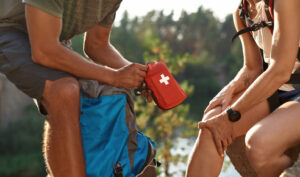
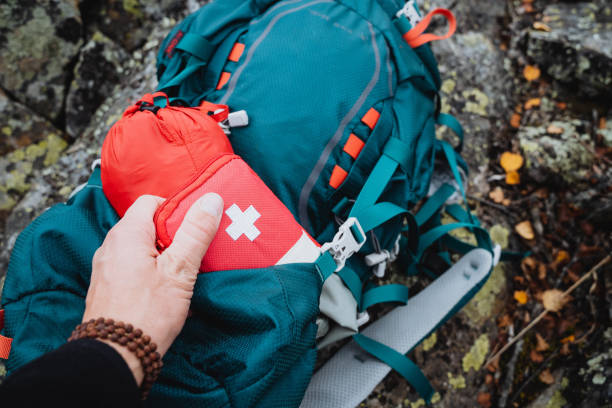
Your first aid kit for the wild isn’t your standard bathroom cabinet affair. You’ve got to be smart, packing lightweight, multipurpose items. And remember, your most important tool is the knowledge in your head—it’s the one thing you’re guaranteed to have with you at all times.
My wilderness first aid kit has evolved over the years. Now it always includes:
- A variety of bandages and gauze
- Antibiotic ointment and alcohol wipes
- Pain relievers and anti-inflammatory drugs
- An emergency blanket
- A tourniquet (for severe bleeding)
- Tweezers and safety pins
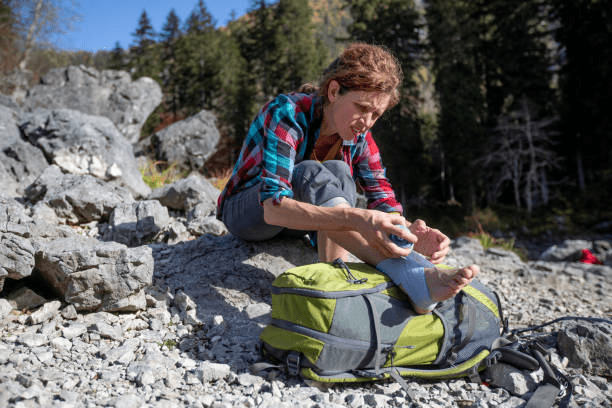
- Moleskin for blisters
- A small notepad and pencil for recording vital signs
But perhaps more important than what’s in my kit is knowing how to use each item and how to improvise when something is missing.
The Mental Game
Key psychological aspects of wilderness first aid:
- Staying calm in chaos
- Decision-making under pressure
- Maintaining morale
Important points:
- Mental state is as crucial as physical skills.
- Calm demeanor reassures patients and bystanders
- Clear, confident communication helps manage crises.
- Decision-making improves with practice.
- A positive attitude can be as vital as medical treatment.
Challenges:
- Making tough choices with limited information
- Deciding whether to move injured persons or wait for help
- Determining when to call for evacuation
Skills to develop:
- Trusting your judgment
- Using humor and encouragement in prolonged emergencies
Never Stop Learning
If there’s one thing my journey has taught me, it’s that you never stop learning. Each trip into the wilderness, each emergency call, teaches you something new. Stay curious, stay humble, and always be ready to adapt.
I still attend wilderness medicine refresher courses regularly. Medicine is always advancing, and it’s important to stay up-to-date with the latest techniques and guidelines. Plus, I love swapping stories and tips with other wilderness enthusiasts and emergency medical responders (EMR).
I also make a point of debriefing after every incident, whether it’s a full-blown emergency or just a minor injury on a day hike. What went well? What could I have done better? This constant self-assessment helps me continue to grow and improve.
A Call to Adventure—Safely
My path from wide-eyed novice to emergency medical responder in the Canadian wilderness has been an incredible journey. It’s shown me the raw beauty of nature, the resilience of the human spirit, and the incredible value of being prepared.
So, to all you adventure seekers out there, embrace the wild, but do it wisely. Learn these skills, not just as a safety net but as a way to deepen your connection with nature. Because when you’re prepared for the worst, you’re free to enjoy the best that the wilderness has to offer.
Remember, in the backcountry, you’re not just a visitor—you’re your own hero. Stay safe, stay skilled, and let the adventures begin! The wilderness is calling, and with the right knowledge and preparation, you’re ready to answer that call.