

I never thought I’d need survival skills until I found myself twenty miles deep in the Rockies with a twisted ankle and an oncoming storm. At first, wilderness survival seemed like something only rugged mountaineers or reality TV stars needed. However, there is an undeniable freedom in knowing you can rely on yourself when you’re off the grid. After years of backpacking, countless close calls, and a few humbling mistakes, I learned firsthand that you don’t need superhuman skills—just practical know-how. Here are the ten essential wilderness survival skills I wish every beginner would learn, so you can enjoy every adventure with confidence.
1. Building a Shelter
Shelter is your first line of defense. When the wind bites and the rain pelts down, the right shelter can prevent hypothermia and allow you to regroup calmly.
Why It Matters
Exposure to wind, rain, or freezing temperatures can threaten your life faster than hunger or thirst.
My Experience
The first time I tried to construct a lean-to in the wild, I underestimated how important insulation is. Laying directly on cold ground zapped my energy, and I spent a freezing night learning a tough lesson.
How To
- Find a dry, elevated location away from hazards.
- Gather natural materials like sticks, leaves, and branches.
- Look for level, high ground away from water flow.
- Use a poncho or tarp with paracord to form a basic A-frame, or pile branches and leaves if you have nothing else.
- Construct a simple lean-to: prop a long branch between two trees, then lean shorter sticks against it. Cover with leaves/brush for insulation.
- Most importantly, always insulate from the ground: a layer of leaves or pine needles can be a lifesaver.
Pro Tip
Practice with tarps at home before relying on natural materials. Practice in your backyard before you try it in the wild.
2. Starting a Fire
Fire equals warmth, morale, and a rescue signal. However, in wind or rain? It’s harder than you think.
Why It Matters
Fire keeps you warm, dries wet clothing, makes water safe to drink, and can signal rescuers. Fire provides warmth, light, comfort, a way to cook, and a means to signal for help.
My Experience
Nothing brought on panic like realizing my matches were soaked—and that I hadn’t brought a backup. Eventually, I learned to always carry a ferro rod or magnesium striker, which work even when wet.
How To
- Build a small teepee with dry twigs.
- Gather tinder (dry leaves/grass, birch bark, cotton balls) and small twigs.
- Place tinder (dry leaves, cotton, or birch bark) at the base.
- Build a teepee or log cabin structure.
- Use a lighter, matches, or a ferro rod to ignite.
- Collect tinder (dry grass, shredded bark), kindling (small sticks), and fuel wood.
- Build a fire lay before lighting: a teepee or log cabin pattern works best.
- Use a spark device or waterproof matches—keep extras in a dry pouch.
- Add larger sticks gradually.
Pro Tip
Carry waterproof matches or a compact fire starter in a zip-lock bag. Carry two ways to make fire and store them in waterproof containers.
3. Finding and Purifying Water
Without water, you’re done in a couple of days. Therefore, knowing where and how to get safe water is critical.
Why It Matters
Dehydration sets in quickly outdoors, and untreated water can carry harmful pathogens. You can survive weeks without food, but only days without water. Streams, springs, and lakes are your best sources.
My Experience
I once drank unfiltered stream water because it “looked clean”. Unfortunately, the aftermath—a week of stomach pain—taught me purification is a must.
How To
- First, look for running streams, springs, or collect rainwater.
- Collect water from flowing streams or rainwater.
- Fill containers with clear, flowing water.
- Purify by boiling for 5-10 minutes or use purification tablets/filters.
- Purify with a portable filter, purifying tablets, or by boiling for at least 5 minutes.
- Finally, avoid stagnant, murky, or contaminated water.
Pro Tip
Always pack a portable water filter as part of your core gear. Additionally, learn how to make a simple filtration system with sand, charcoal, and a cloth.
4. Navigation Basics
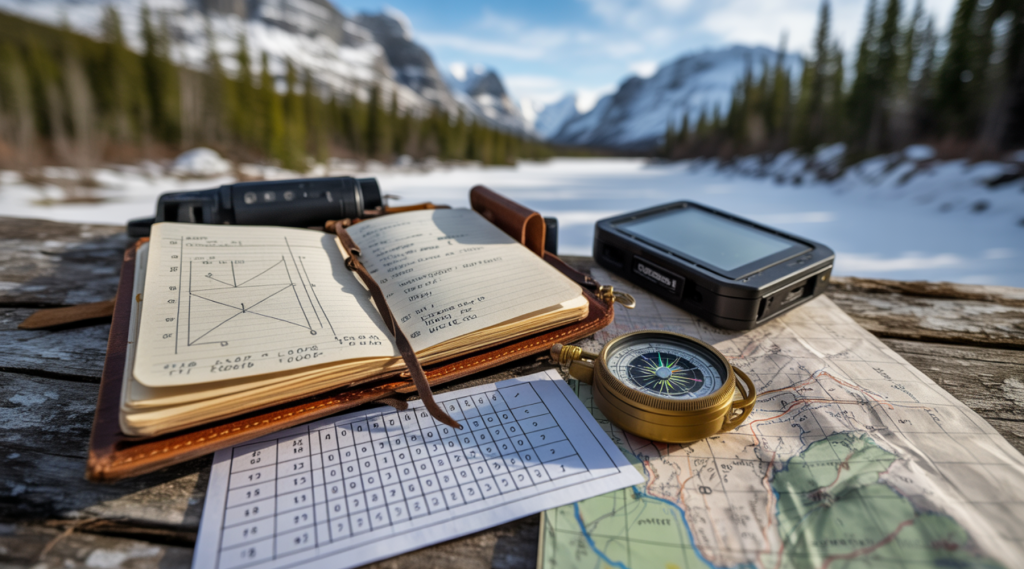
Getting lost happens quicker than you’d think. Moreover, when electronics die, you need the basics.
Why It Matters
Getting lost is easy—even for experienced hikers—without navigation skills.
My Experience
A dead GPS and overconfidence cost me hours of backtracking. Nothing beats map-and-compass proficiency.
How To
- Learn to read a map and use a compass.
- Always bring a map and compass—and know how to use them.
- Learn to read topographic maps and orient them with a compass.
- Take note of landmarks, trail markers, or the sun’s position.
- Learn to identify natural landmarks and use the sun or stars as guides.
- Use landmarks to triangulate your position.
- Mark your route or waypoints along the trail.
- Always mark your trail adventuring off the beaten path.
Pro Tip
Download offline maps or GPS apps for your phone (but never rely solely on electronics). Don’t rely solely on phones or GPS—batteries fail!
5. First Aid Fundamentals
Blisters to broken limbs, the wild can be dangerous. Ultimately, you’re your own medic out there.
Why It Matters
Cut, blisters, insect bites, or sprains are common. Knowing first aid can prevent minor issues from becoming emergencies. When help is miles away, self-reliance is key.
My Experience
Patch-ups with duct tape and improvising splints with hiking poles taught me to carry (and actually learn) first-aid.
How To
- Learn to clean and dress wounds.
- Learn how to clean, dress, and bandage wounds.
- Learn to clean and dress wounds, splint injuries, and recognize hypothermia/heat exhaustion.
- Treat blisters early.
- Know how to treat sprains, blisters, hypothermia, and dehydration.
- Know the signs of hypothermia and dehydration.
- Carry a compact first-aid kit—know what’s in it!
- Keep a basic first aid kit; refresh perishable elements regularly.
Pro Tip
Take a basic wilderness first aid course. Always carry a kit tailored to your adventure. Take a wilderness first aid course if you can.
6. Signaling for Rescue
If you’re lost or in danger, you’ll want to attract attention. For this reason, signaling is essential.
Why It Matters
If lost or injured, you need to attract rescuers’ attention.
My Experience
Once, separated from my group in fog, I used my signal whistle to convey my location. Three sharp blasts mean SOS.
How To
- Carry a whistle—three blasts mean “help.”
- Carry a signal whistle (never just your voice).
- Whistle (three blasts = help), flashlights, mirrors, signal fires, and bright clothing.
- Build smoky signal fires.
- Build three signal fires in a triangle.
- Use reflective items (mirror or foil) to catch sunlight.
- Flash reflective items (mirrors, foil, even a phone screen).
- Create SOS signals using rocks, logs, or footprints.
Pro Tip
Bright clothing doubles as a signal. Keep a whistle on your person, not just packed away.
7. Knot-Tying
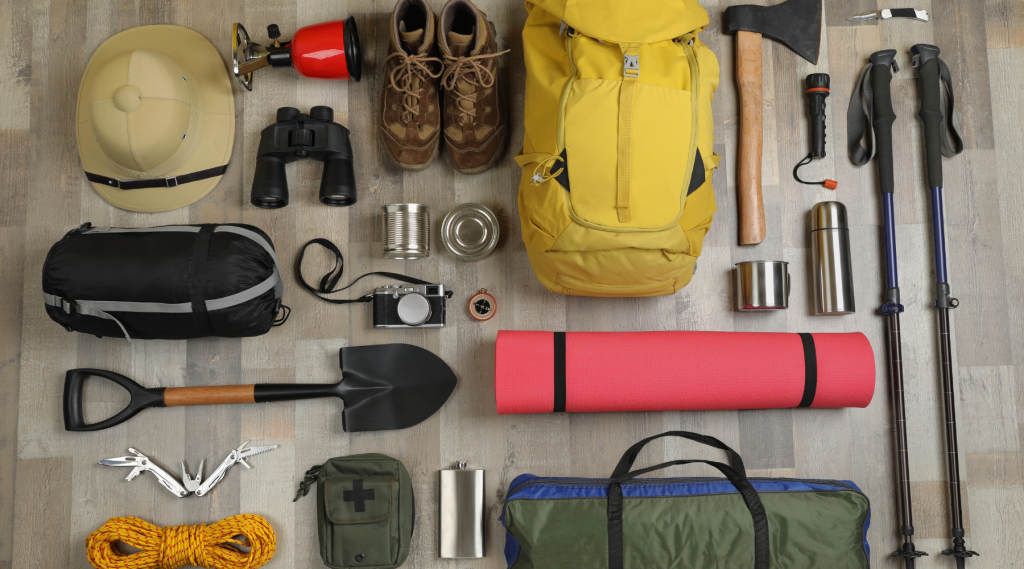
From setting up tarps to securing food, knowing a few knots goes a long way.
Why It Matters
Knots secure shelters, gear, and bundles of firewood quietly and efficiently. Knot skills help with shelters, gear repairs, and rescues.
My Experience
I fumbled many times before mastering a reliable bowline and taut-line hitch. Eventually, the muscle memory kicked in.
How To
- Practice the bowline, square knot, and taut-line hitch.
- Practice the bowline, taut-line, and square knot.
- Master bowline, square knot, clove hitch, and taut-line hitch.
- Use sturdy paracord or shoelaces in a pinch.
- Use quality paracord—it’s versatile and strong.
Pro Tip
Keep a guide card with basic knots in your survival kit. Practice knots with paracord at home to commit them to muscle memory.
8. Food Foraging Basics
You can go weeks without food, but a foraged meal can boost morale.
Why It Matters
While food isn’t the most urgent concern, knowing what’s safe to eat adds calories and variety. Food is a lower survival priority, but knowing what’s edible can boost morale and energy.
My Experience
Wild berries were my saving grace on a long trek. However, misidentifying plants can be deadly, so study carefully.
How To
- Learn to identify a handful of local edible plants and berries.
- Learn to identify a few local edible plants, nuts, and berries (never eat unknown plants!).
- Learn 3–5 edible plants, nuts, or berries native to your region.
- Avoid mushrooms unless you’re an expert.
- Observe local animal or insect life for clues.
- Insects are widely edible and protein-rich.
- Try simple traps or fishing if skilled and local laws allow.
- Never eat plants you’re unsure of.
Pro Tip
Take a foraging walk with a local expert or use a regional guidebook. Forage only what you’re certain is safe.
9. Weather Awareness
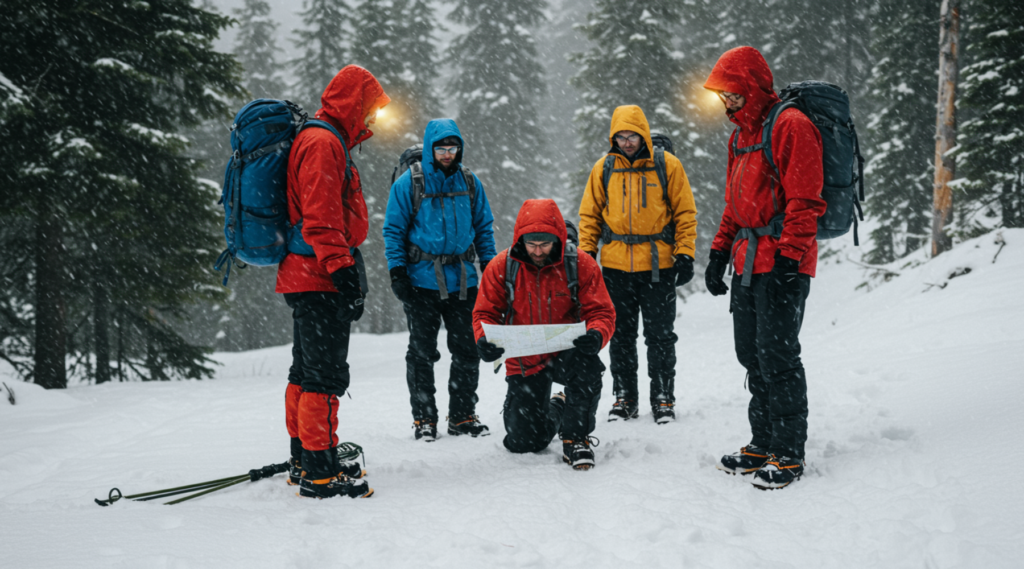
Bad weather can escalate into real danger. Consequently, reading the sky is a skill as old as time.
Why It Matters
Recognizing weather shifts allows you to adapt before conditions worsen. Reading nature’s clues can help you anticipate danger.
My Experience
I ignored rising wind once—then a surprise squall flattened my unanchored tent.
How To
- Learn to “read” the sky—cloud types, wind direction, temperature drops.
- Watch cloud formations, wind shifts, and sudden drops in temperature.
- Study cloud formations and wind shifts.
- Listen for distant thunder or feel humidity changes.
- Plan for rain, cold, and darkness—even on sunny mornings.
- Prep for rain or cold even if it’s sunny at the trailhead.
Pro Tip
Always check weather forecasts before your trip. Always check forecasts before heading out, but be prepared for surprises.
10. Staying Calm and Problem-Solving
More important than any gear: your mindset. Above all, panic is your enemy.
Why It Matters
Panic leads to poor decisions. Remaining calm helps you think clearly and act logically. Your greatest tool in survival is your mindset.
My Experience
My most difficult nights were made bearable by slow breathing and reciting: Stop, Think, Observe, Plan (the S.T.O.P. method).
How To
- Stop. Sit down. Take deep breaths.
- Breathe deeply; avoid panic.
- Pause, breathe deeply, analyze your situation.
- Use the STOP method: Sit, Think, Observe, and Plan.
- Evaluate your situation and prioritize needs (shelter, water, signaling, food).
- Focus on immediate needs: shelter, water, signal, fire, food.
- Make a plan and stick to it, adjusting as new information arises.
- Make a simple, stepwise plan and act deliberately.
Pro Tip
Practice slow, deep breathing and positive visualization. Practice mindfulness and stress-reduction techniques at home to build resilience.
Common Challenges
1. Fear and Panic
Panic clouds your judgment. I learned to counter this with deep breathing and positive self-talk, setting tiny achievable goals.
2. Overpacking or Underpreparing
My early hikes saw me hauling far too much or forgetting crucial items. Overtime, build a checklist and pack intentionally.
3. Overconfidence
Thinking nothing bad ever happens—until it does. Therefore, plan for the worst, hoping I’ll never need everything I bring.
Practical Advice for All Levels
Beginner
Practice shelter building and fire making in your backyard before your first major trip. Invest in a quality multi-tool and water filter.
Intermediate
Learn navigation with compass and map, and try solo overnighters close to civilization. Expand your plant knowledge.
Advanced
Test yourself: minimalist overnight trips, advanced knots, or emergency signaling in various conditions. Sharpen your foraging and weather-reading abilities.
Budget-Friendly
DIY fire kits (cotton balls dipped in wax), local library field guides, and YouTube tutorials abound.
Premium Gear
Invest in ultralight tarps, high-end water filters, and GPS beacons as your skills improve.
Reflective Questions & Engagement
- When was the last time you practiced an essential survival skill?
- What’s the one survival scenario that most concerns you?
- Which of these ten skills do you feel least confident in? Why?
- How might mastering these skills impact other areas of your life?
Share your thoughts and stories. Have you had a close call or learned a key lesson the hard way? Comment and let’s build a community of prepared, resourceful adventurers!
Conclusion
The wilderness is stunning—but it can also be unpredictable. By mastering these 10 essential wilderness survival skills, even total beginners can face the unknown with calm and confidence. Each skill is learnable; start small by practicing in your backyard, then test your abilities on local trails. With preparation and the right mindset, you can unlock a deeper connection with nature and yourself.
Every time I return from the wild, whether triumphant or humbled, I feel more alive—and more capable. Survival isn’t about fearing the unknown; it’s about embracing self-reliance and knowing you can meet any challenge. Start small. Practice regularly. Your future self (and those you might need to help) will thank you. Nature is unpredictable and powerful—but so are you, armed with these ten essential survival skills.
Survival in the wild isn’t about superhuman endurance—it’s about preparation, practice, and the right mindset. Start honing these skills close to home, test yourself in different conditions, and always respect the power of nature.
Call to Action
Ready to level up your survival instincts? Share your experiences or add your own must-have skills in the comments!
Ready to practice? Pick one skill this weekend—build a shelter in your backyard, light a fire with a ferro rod, or learn a new knot. Share your results and tips below—let’s learn and get stronger together!
Now, pack your bag, step outside, and begin your own journey of learning. The wild has much to teach—all you have to do is begin.
Your next wilderness adventure awaits—are you ready?