
A Lesson on the Yukon River
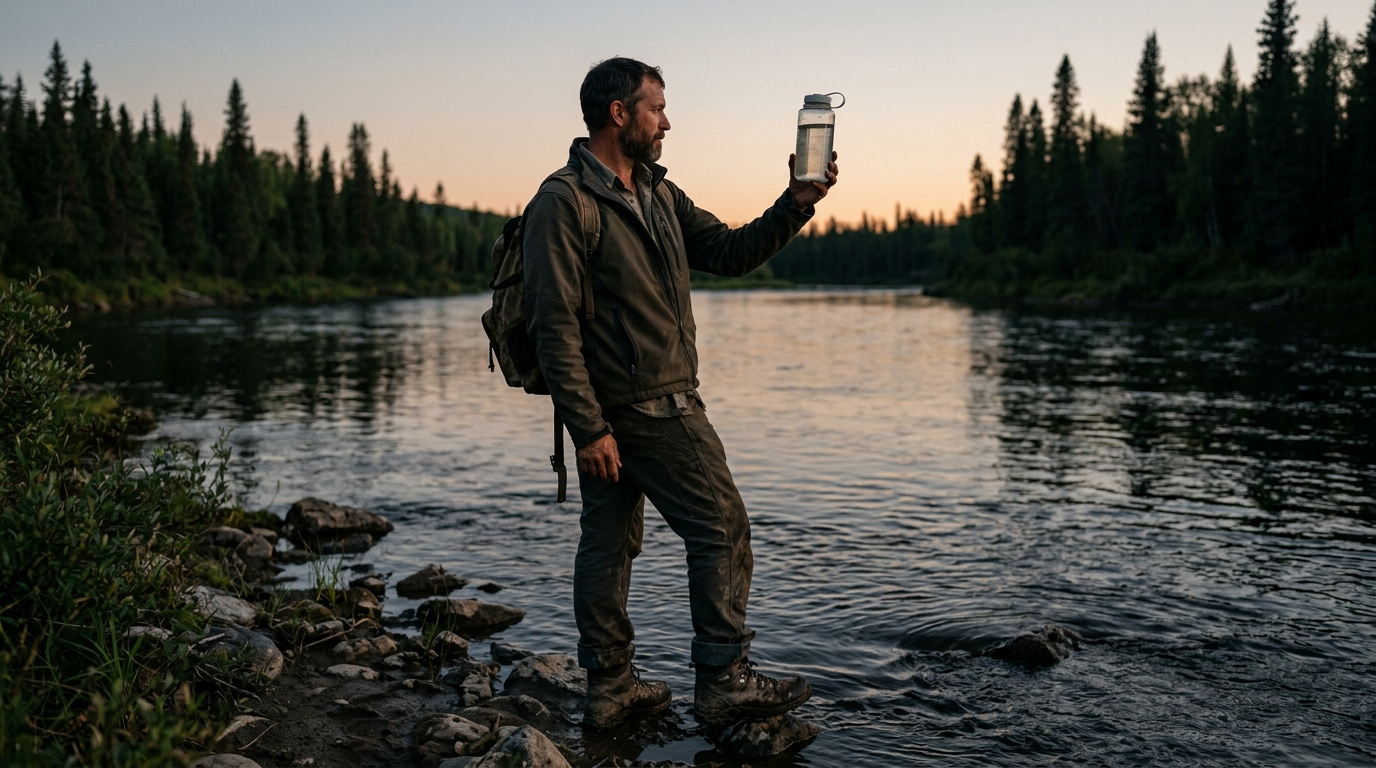
It was mid-summer on the Yukon River, and the rain had been falling hard for hours. I was guiding a group of tourists from Germany — enthusiastic, prepared in every way their itinerary suggested, and completely unprepared for what the river had in mind. Our planned water stop was downstream, but conditions had changed and we needed to source and treat water where we were: a turbid bank, fast-running current, and no shelter from the weather.
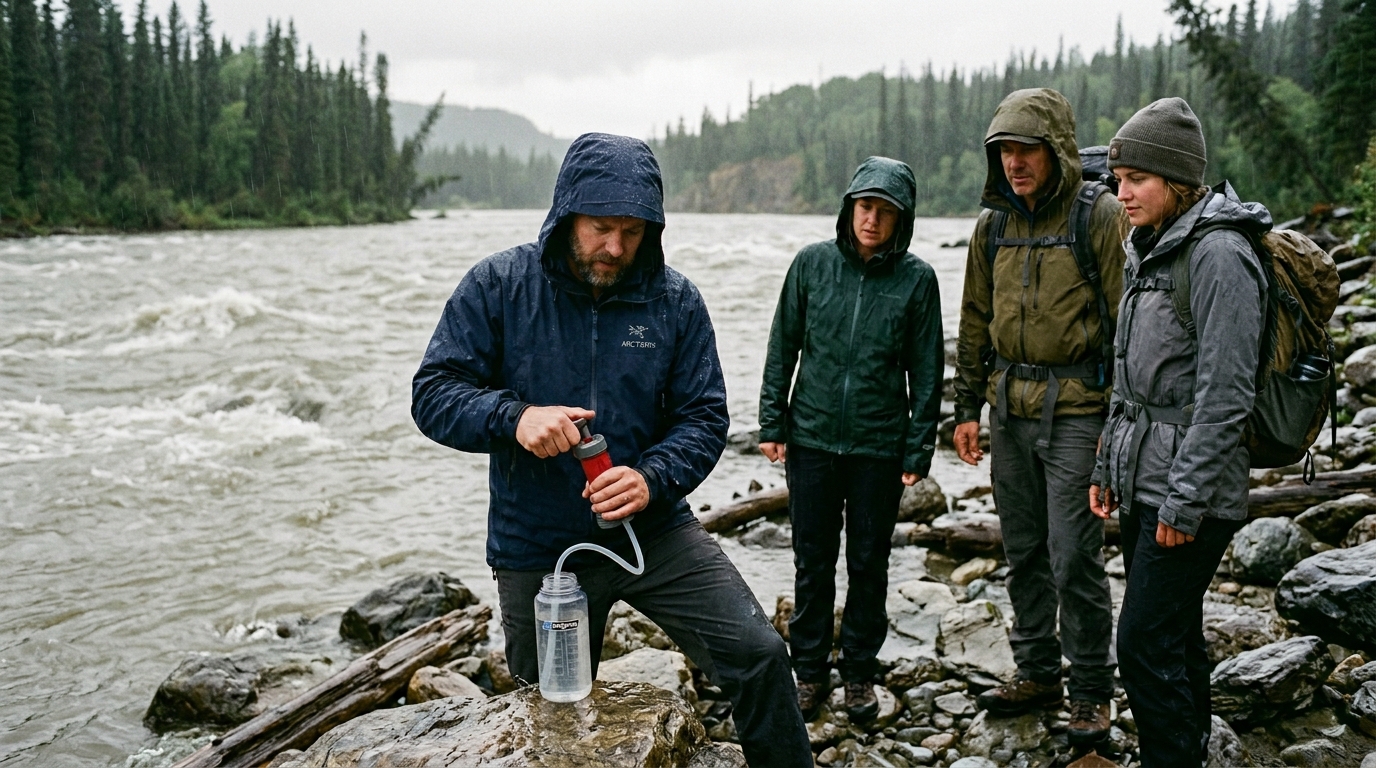
What made the difference that afternoon wasn’t improvisation. It wasn’t a clever trick I pulled out of nowhere. It was a systematic protocol I had been using for years — a structured decision sequence that tells me exactly how to identify, assess, and treat any water source in the field, regardless of conditions. Within twenty minutes, we had clean drinking water. The group watched the whole process, and several of them said afterward it was the single most practical thing they’d seen on the entire trip. That’s what systematic wilderness protocols do. They convert uncertainty into action. And water procurement is one of the areas where that matters most.
Why Structured Water Knowledge Matters — For Anyone Who Goes Remote
When it comes to wilderness survival training for corporate professionals: the people who pick up field skills fastest are almost never the ones with outdoor experience. They’re the analytical thinkers — the people who are used to systems, risk frameworks, and clear decision trees.
Water procurement is a perfect example of why that matters. The topic sounds simple — find water, make it safe to drink — but in a northern wilderness context, it’s a multi-variable problem. You’re assessing source reliability, contamination risk, treatment method, equipment status, temperature, and your own energy budget, often in poor weather and limited daylight. That’s not a gut-feel situation. That’s a structured problem with a structured solution.
Corporate professionals understand structured problems. They run them through frameworks and processes every day at work. The skill set transfers directly — it just needs to be pointed in the right direction.
If you hike, travel remotely, or work in the resource sector anywhere in Canada’s north, professional wilderness training on water procurement isn’t an optional extra. It’s a foundational competency. Dehydration impairs judgment faster than almost any other field condition. And in a sub-Arctic environment like the Northwest Territories, the water you find isn’t always what it appears to be — clear doesn’t mean clean, and fast-moving doesn’t mean safe.
My approach has always been certainty over fear. I’m not trying to scare you into paying attention. I’m giving you a system that makes the whole thing manageable — because it is.
Three Core Water Competencies — The Northern Field Protocol
Here’s how I structure water management in the field and from professional outdoor risk management training. Three competencies, each with its own logic and protocol.
Competency 1: Source Identification and Risk Assessment
The first question in any water situation isn’t “how do I treat this?” It’s “should I be drinking from here at all?” That sounds obvious, but in the field, under pressure, people skip the assessment step and head straight for the filter. That’s where mistakes happen.
I use a structured four-point source assessment before I commit to any water source. I’ve been running this same check for a long time, and it’s the first thing I walk students through in Wilderness Ready:
| The Four-Point Source Assessment |
| 1. ORIGIN — Where is the water coming from? Surface runoff, glacial melt, spring, river, still pond? Each carries different risk profiles. |
| 2. UPSTREAM CONDITIONS — What is upstream? Mining activity, agricultural land, community waste, animal congregation areas? In NWT, beaver activity is a primary giardia vector — a detail that matters at 68°N. |
| 3. CLARITY AND COLOUR — Turbid or discoloured water requires pre-filtration before any treatment method. Crystal-clear water still requires full treatment. |
| 4. SEASONAL CONTEXT — Spring melt in the Mackenzie Delta carries significantly different contamination risk than mid-winter sources. Ice melt from known clean ground is often your lowest-risk option in winter. |
The professional takeaway here is the same logic you’d apply to due diligence in any high-stakes decision: assess before you commit. The extra ninety seconds spent on source assessment saves you from picking the wrong water and paying for it with a filtration failure, a sick team member, or worse.
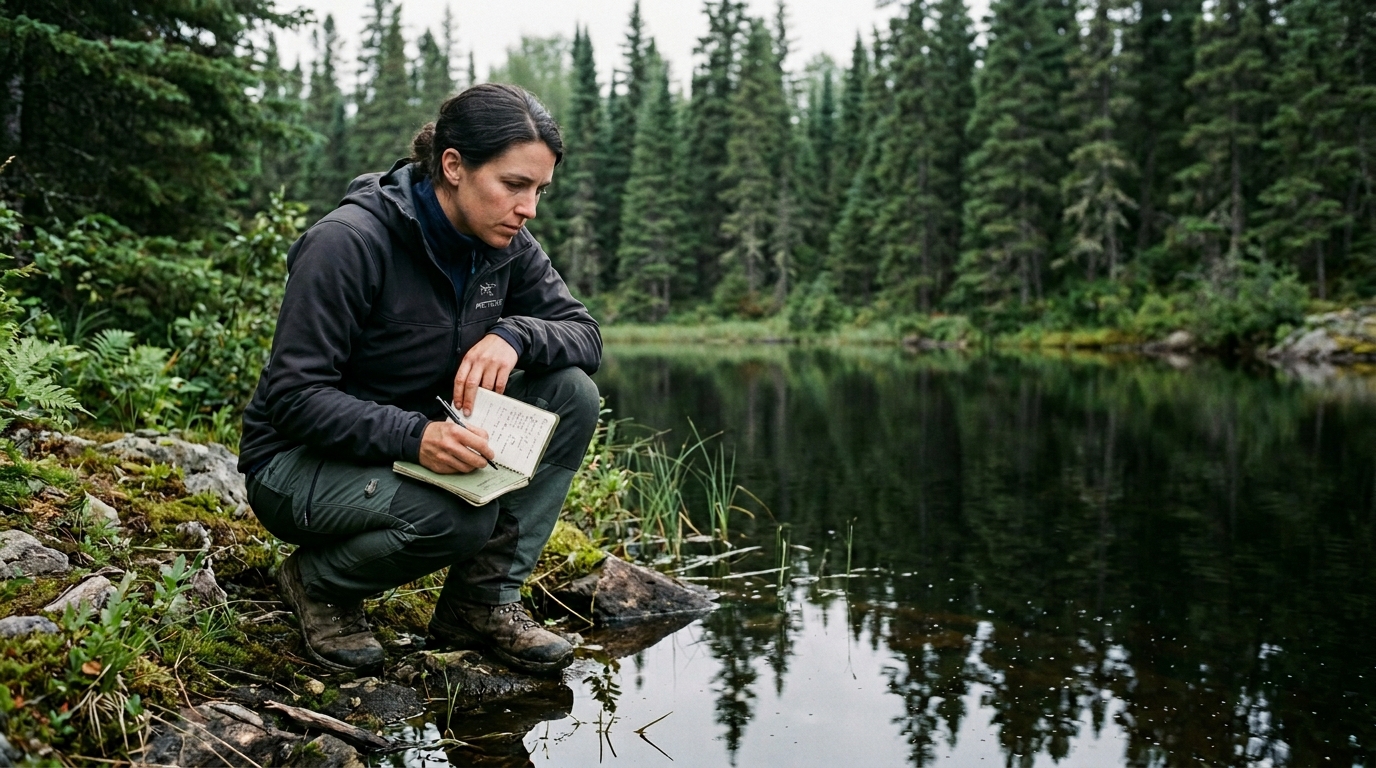
In NWT specifically, fast-moving rivers above the treeline often look clean but carry protozoan contamination from wildlife activity. Glacial and snowmelt sources at elevation are generally safer but require knowledge of the drainage basin. This is the kind of Arctic survival skills that require real field experience — not just a general guideline.
Competency 2: Cold-Weather Procurement — Winter-Specific Field Protocol
Water management in sub-Arctic conditions is its own competency. I learned this the hard way during a winter camping trip on a frozen lake in northern Canada, working at −20°C with a group testing cold-weather preparedness. Water that works fine in summer becomes a problem set in winter — and if you haven’t trained for it, it will catch you off guard.
Here’s what the −20°C environment teaches you that summer never will:
- Filter freeze-up. Standard filters become non-functional when they freeze. In NWT winter conditions, a ceramic filter element that freezes and thaws repeatedly will crack internally, and you won’t be able to tell by looking at it. It’ll still push water through — just no longer safely. I carry filters in an inside pocket and rotate them back to warmth during use.
- Melting snow is calorie work. In genuine cold-weather survival, melting snow for water is viable but expensive — energy-wise and fuel-wise. You need approximately ten parts snow to produce one part water. Starting with a small amount of liquid in the pot dramatically reduces melt time. Never eat snow directly: it drops core temperature and accelerates dehydration.
- Bottle insulation matters as much as treatment. Clean treated water is useless if it freezes solid in your pack. Wide-mouth insulated bottles, carried inverted to keep the opening from freezing first, are standard kit in my winter protocols. Sleeping with a half-full water bottle inside your sleeping bag preserves it for morning.
- Liquid water sources under ice. In the Mackenzie Delta and across the NWT sub-Arctic, moving water sources under ice are often accessible and tend to be cleaner than still-water sources. Knowing how to safely access sub-ice water in a frozen landscape is a specific skill — and one that’s part of the cold-weather module in my field training.
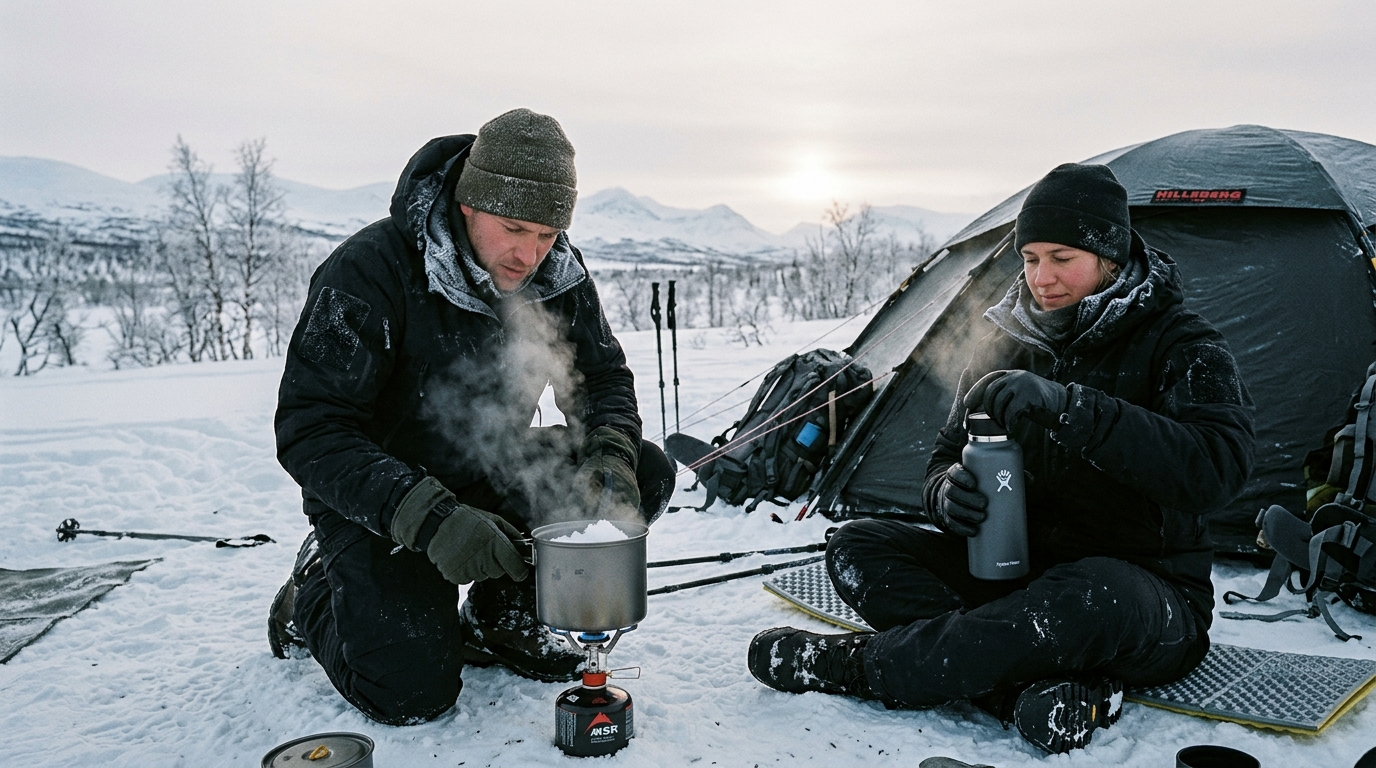
The professional takeaway: cold-weather water procurement requires a separate protocol, not just an adaptation of summer practice. Your standard procedure breaks down at temperature. You need a winter-specific version trained and rehearsed before you need it.
Competency 3: The Purification Hierarchy — Redundancy by Design
Once you’ve identified and accessed a water source, treatment follows a clear hierarchy. I call it redundancy by design — the same logic a good project manager uses when building contingency into a critical deliverable.
Here’s how I structure it, from most reliable to most limited:
| Purification Hierarchy — Northern Field Application |
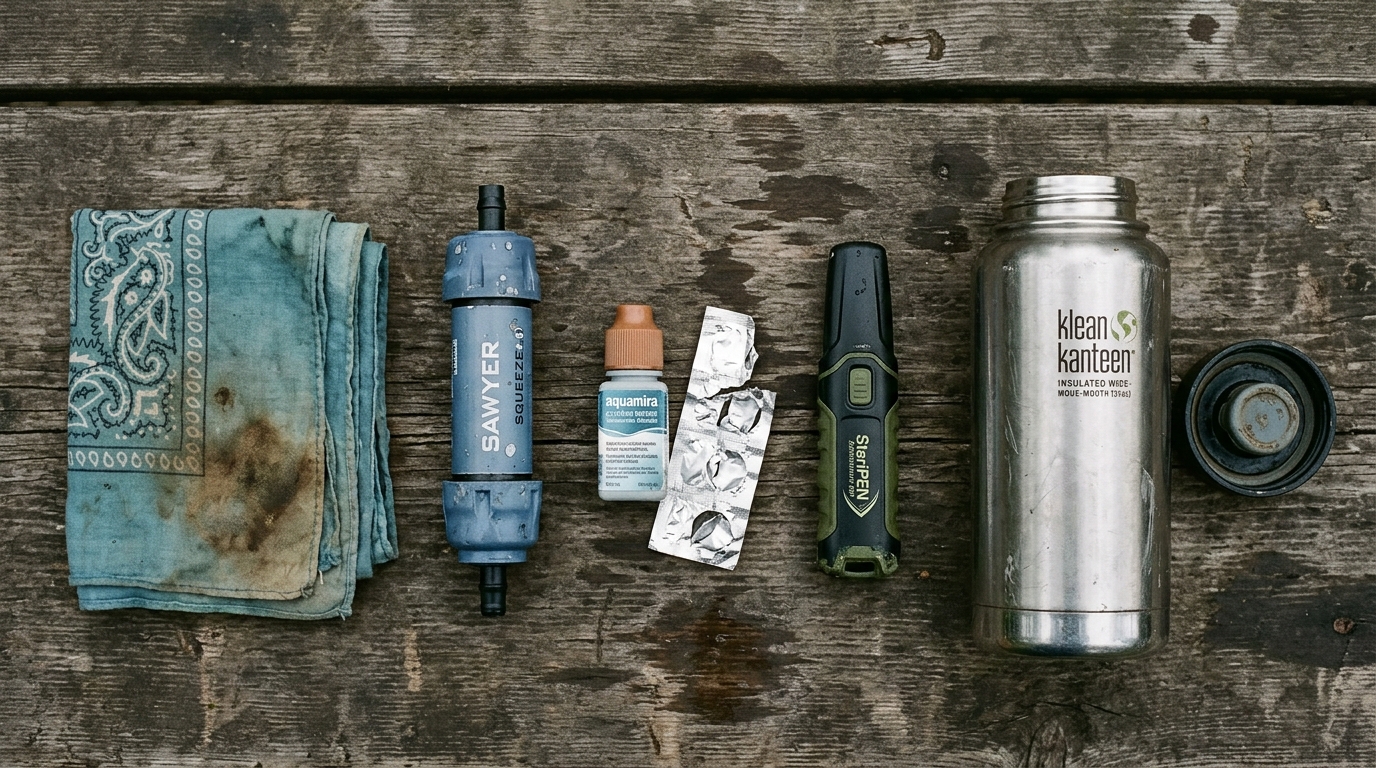
| TIER 1 — BOILING: Most reliable. Kills all pathogens. At NWT elevations, a full rolling boil for one minute is sufficient. Pre-filter turbid water through a bandana or buff first. Boiling is your non-negotiable fallback when all else fails. |
| TIER 2 — QUALITY FILTRATION: A 0.1-micron microfilter handles protozoa and bacteria effectively. In NWT, giardia and cryptosporidium are the primary biological concerns. Ensure your filter is rated for the pathogen profile of your region. Store filters unfrozen — see winter protocol above. |
| TIER 3 — CHEMICAL TREATMENT: Iodine or chlorine dioxide tablets are reliable backups when filtration is unavailable, but less effective against cryptosporidium in cold water. Extended contact time (double the standard for water below 10°C) is required. These are backup, not primary. |
| TIER 4 — UV TREATMENT: Effective and fast in clear water. Unreliable in turbid water. Not cold-weather compatible without battery management. Always combine with pre-filtration if using UV in NWT conditions. |
| FIELD RULE: Carry at least two independent treatment methods. Never rely on a single system in remote northern terrain. |
The Yukon River trip I mentioned earlier? On that afternoon, my primary filter handled the job. But I also had chemical tablets in my kit and a metal pot rigged for boiling — all three tiers, ready to deploy. The system held because it was designed to hold, not because conditions cooperated.
Why the NWT Context Changes Everything
There’s a reason I’ve chosen to build my practice at 68° North in Inuvik. The Northwest Territories operates at an environmental margin that most wilderness training programs don’t address — and that margin produces skills that are both more demanding and more transferable.
In the Mackenzie Delta, water sources shift dramatically by season. In late spring, snowmelt overwhelms surface drainage and temporarily elevates contamination loads in standing water. In summer, beaver activity across the sub-Arctic adds giardia pressure to rivers and ponds that look pristine. In winter, ice conditions determine which sources are accessible at all. Temperature swings of 60°C or more between seasons — from +30°C in July to −40°C in January — mean that no single approach to water management works year-round.
This isn’t abstract. In the field around Inuvik, working with guided groups, I’ve encountered every one of these conditions. I’ve sourced water from the Mackenzie River at −35°C, from open leads in river ice, from glacial drainages, and from turbid spring creeks where visibility was near zero. Every scenario requires the same systematic thinking — assess, prioritise, execute — applied to a different set of variables.
Here’s why this matters to you, even if you’re never planning to visit the NWT: people who train in the most demanding environment develop protocols that work everywhere else too. The discipline built in a sub-Arctic water procurement scenario is more than sufficient for a backcountry trip in southern Canada, a remote work deployment, or a corporate retreat. You’re building from the top of the envelope, not the middle of it.
Cold weather survival skills — real ones, tested at real temperatures — have a transfer value that’s hard to overstate. When your outdoor safety protocols are designed for −40°C, they hold up at −10°C without you having to think twice.
Getting Started: A Three-Phase Water Readiness Roadmap
One of the things I’ve found working with analytical, systems-oriented professionals is that they want a clear path forward — not a general recommendation to “learn some survival skills.” So here’s a practical three-phase progression for building real water procurement competency.
Phase 1 — Foundational Knowledge (Weeks 1–4)
Start with understanding the threat landscape: what pathogens are relevant to your specific field environment, what source types carry which risks, and what treatment methods are appropriate for each. This is classroom-level content, and it’s the foundation everything else is built on. No gear required yet.
- Learn the biological hazard profile: viruses, bacteria, protozoans — and which methods address each
- Study source assessment logic: surface vs. ground vs. glacial vs. still water
- Understand the purification hierarchy before you invest in equipment
Phase 2 — Equipment Familiarisation (Weeks 5–8)
Get your kit sorted and learn your gear before you need it in the field. Every piece of water treatment equipment has failure modes — and you need to know them at home, not while you’re standing at a riverbank. Test your filter. Understand its cold-weather limitations. Know your backup options.
- Acquire a quality 0.1-micron filter, chemical tablets, and a metal pot that can go on a fire
- Practice the full treatment sequence at home: pre-filter, treat, store
- Test your filter in cold conditions and understand how to prevent freeze damage
Phase 3 — Field Application and Stress-Testing (Ongoing)
Gear and knowledge together aren’t enough. The protocol needs to be practised until it’s habitual — particularly under the kind of pressure, weather, and fatigue that real field conditions produce. Do day trips, overnight trips, cold-weather camping. Deliberately practise water procurement as a skill, not just as a task you manage incidentally.
- Apply the Four-Point Source Assessment on every outing, even when you don’t need to
- Practice water procurement in rain, cold, and low-light conditions
- Add winter-specific protocols progressively as you build cold-weather experience
| Ready to go further? Water procurement is one of the foundational modules in Wilderness Ready — my structured online training course built specifically for people who want practical, systematic wilderness skills. If this is the kind of thinking that resonates with you, that’s exactly the environment we’ve built. Head over to WildSurvival101.com to find out more. |
The Bottom Line
Water is the most time-critical survival resource there is. You can manage without food for days. You can’t manage without safe water. But this isn’t a reason to be anxious about wilderness travel — it’s a reason to build a solid protocol and know how to execute it.
I’ve been sourcing and treating water in some of the most demanding environments in North America for decades. The system I use isn’t complicated. It’s structured, it’s reliable, and it’s something you can learn — regardless of your current experience level.
If you think in systems, you’ll find that this clicks faster than you’d expect. The frameworks are straightforward. The practice is what builds the confidence. And the confidence is what makes the difference when conditions don’t cooperate.
— Ian Flood, WildSurvival101.com · Inuvik, Northwest Territories · 68° North