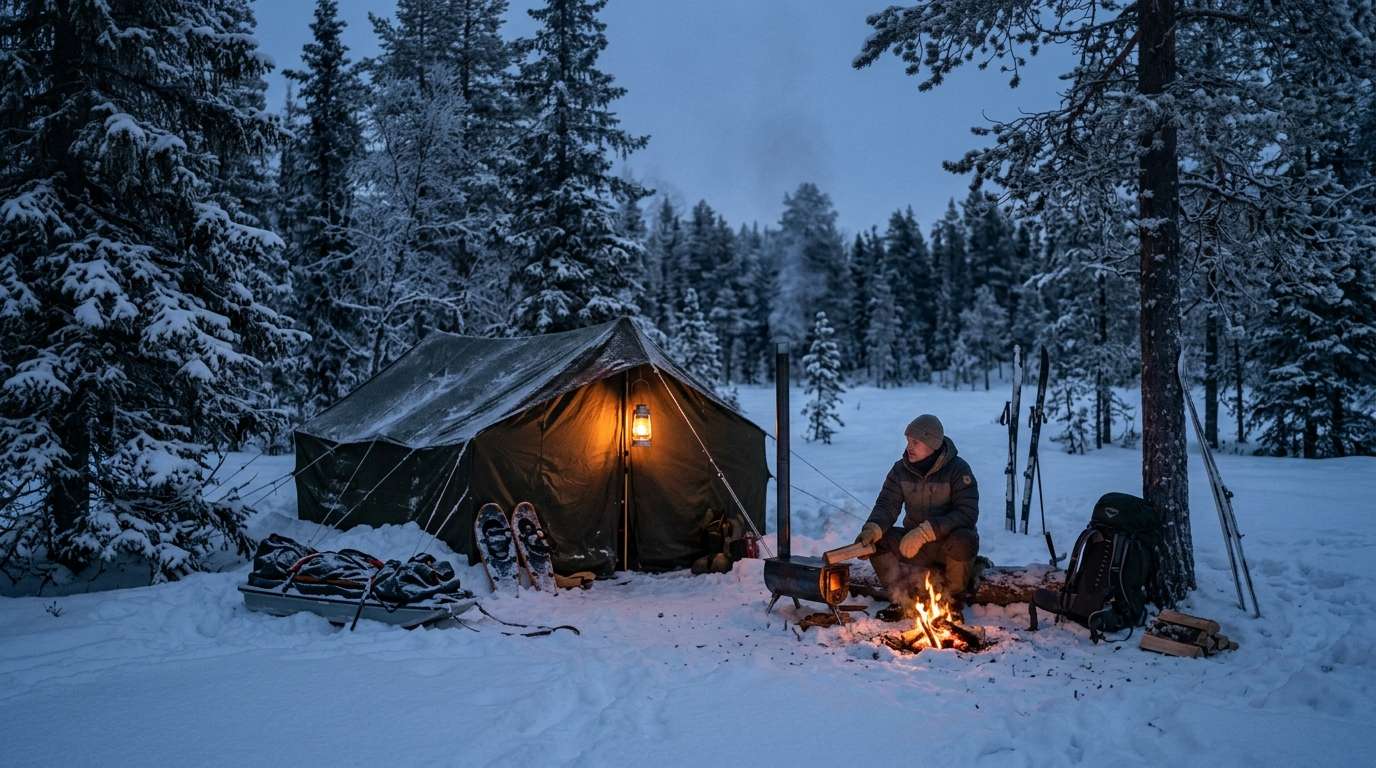
A Winter Call in Hay River
It was winter in Hay River, Northwest Territories — the kind of cold where lying unconscious outside, even for an hour, puts a person in serious danger. Someone had called it in: a man found lying in a narrow path through the trees, not visible from the road. By the time we arrived, he had a reduced level of consciousness. Vitals were marginal but holding. No obvious trauma. No clear account of how he’d got there.
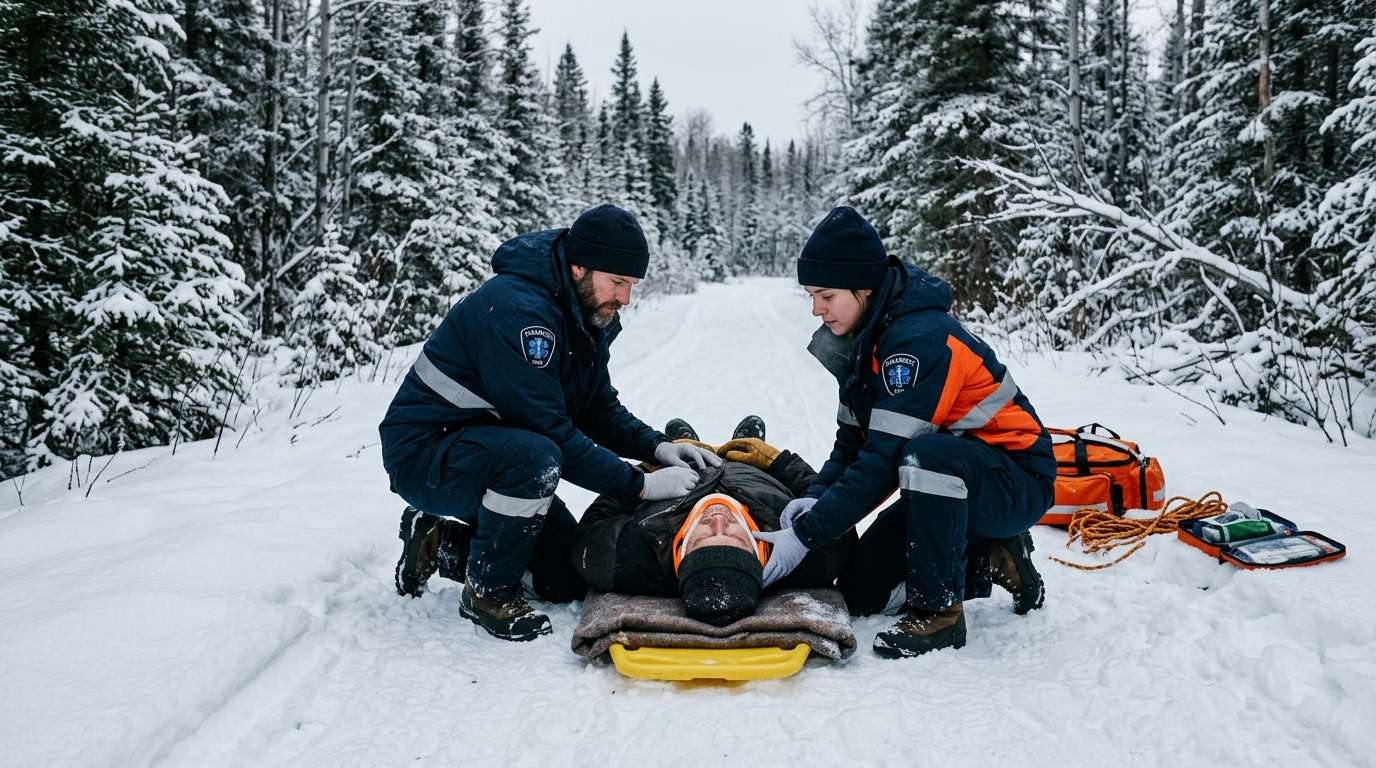
The most likely explanation was alcohol. The clinical concern was a fall he couldn’t tell us about — a head injury, a compromised spine. We didn’t speculate. We followed the protocol: a full assessment, a neck collar applied carefully, then a controlled lift onto the stretcher with his spine kept straight throughout. Every step was deliberate. Every step was the same as it would have been for any patient with an unknown mechanism of injury.
That’s what systematic training produces. Not a response calibrated to assumptions about what probably happened — a response that accounts for what might have happened. In a scene with incomplete information and real consequences for getting it wrong, the protocol is what keeps the patient safe.
Why Your Professional Brain Is Built for This
There’s a persistent myth in outdoor culture that wilderness survival is somehow opposed to the corporate world. That the bush rewards instinct and spontaneity, and that people who think in systems, frameworks, and protocols are somehow ill-suited for it.
After five years as an Emergency Medical Responder in the Northwest Territories and a decade of operating in some of Canada’s most remote environments, I can tell you categorically: that myth is wrong.
Analytical thinkers — professionals who work in project management, operations, finance, engineering, health and safety — already possess the core mental architecture that wilderness preparedness is built on. The most capable leaders weren’t the most daring ones — they were the ones who planned their route before they walked it. It’s been true in every training environment I’ve worked in since. Here’s what I mean.
YOU ALREADY THINK IN PROTOCOLS
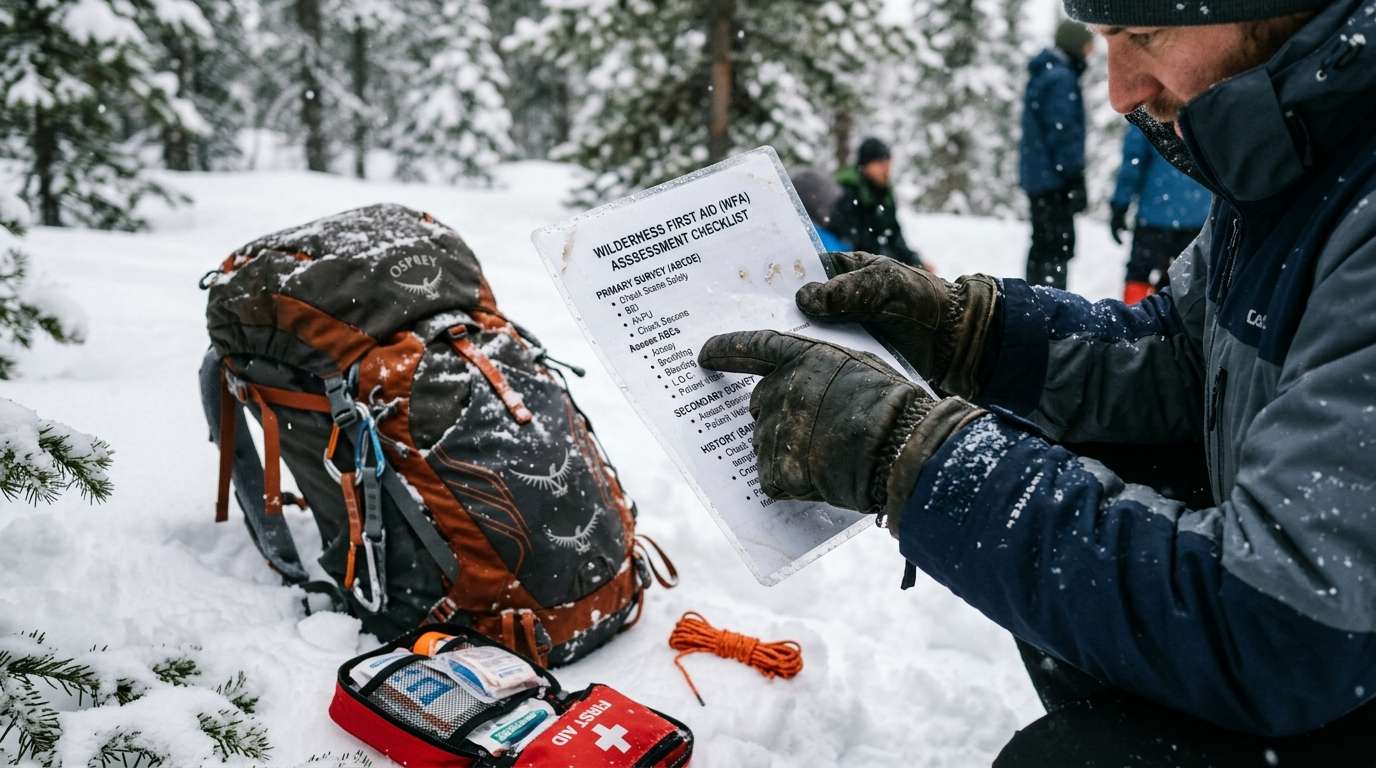
Survival isn’t improvisation — it’s protocol execution under pressure. The same way you manage a project risk register or run a pre-flight checklist, wilderness preparedness operates on structured decision trees. When students learn the ABCD wilderness first aid assessment framework, professionals pick it up in a fraction of the time it takes someone without a systems background. They’re not learning a new way of thinking; they’re applying a familiar one to a new domain.
YOU ALREADY MANAGE RISK FOR A LIVING
Every professional who has ever conducted a hazard assessment, written a safety protocol, or run a post-incident review understands the core concept: identify the threat, assess the likelihood and impact, implement a control. Wilderness risk management follows the same logic. The variables are different — weather windows instead of project timelines, terrain assessment instead of scope creep — but the methodology is identical.
YOU ALREADY UNDERSTAND THE COST OF POOR PREPARATION
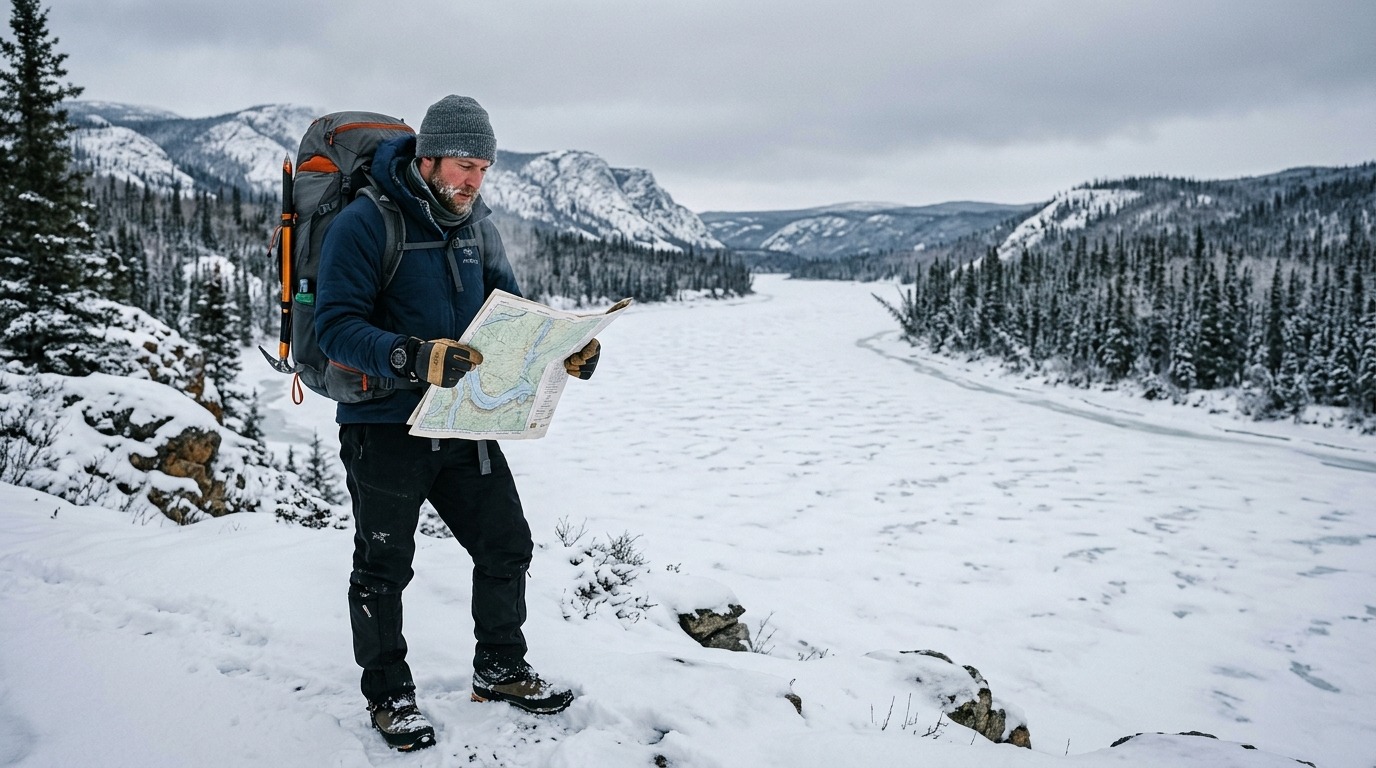
You’ve seen projects fail because someone assumed instead of verified. You’ve watched good decisions get undermined by inadequate planning. The wilderness operates by the same rules. The professionals who struggle outdoors aren’t the analytical ones — they’re the ones who thought the outdoor environment was casual enough to require less rigor than their professional life. It never is.
“The same way you wouldn’t walk into a board meeting without your materials, you don’t head into the backcountry without a system. The wilderness rewards the same preparation you already bring to every other area of your professional life.”
— Ian Flood
Three Competencies Where Analytical Thinkers Excel
1. Wilderness First Aid: The ABCD Assessment Framework
The ABCD protocol (Airway, Breathing, Circulation, Deadly Bleeding) is systematic, sequential, and designed to work under pressure with limited information. It’s the same assessment structure I used as a volunteer firefighter and EMR in the Northwest Territories — a framework that keeps responders functional in chaotic scenes because it removes the need to decide what to do next. The sequence decides for you. Sound familiar?
What makes it particularly well-suited to analytical learners is that it eliminates the problem of ‘paralysis by analysis’ that can affect untrained responders. Instead of standing at a scene trying to take in everything at once, you move through a defined sequence. Airway first. Always. Then breathing. Then circulation. The protocol forces order onto chaos.
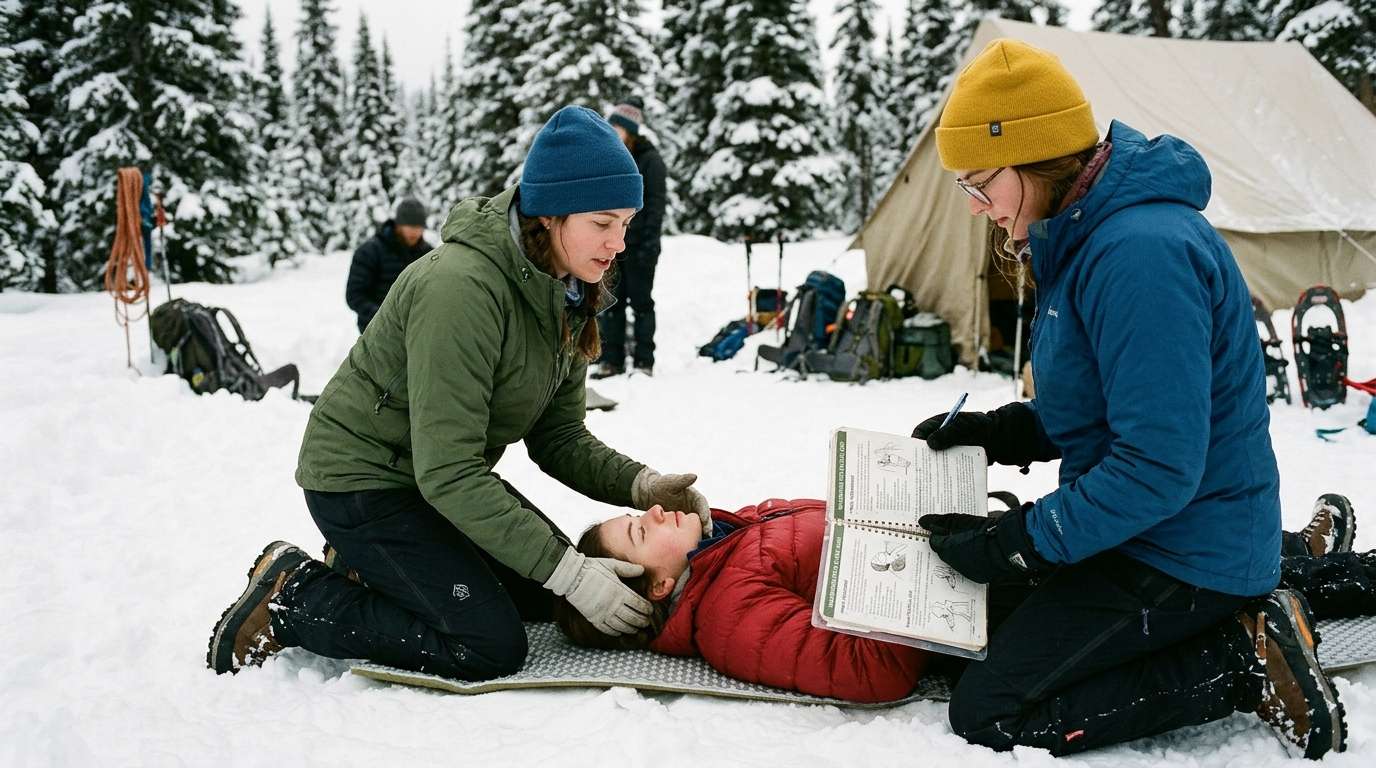
A group of resource industry workers north of Yellowknife were training one winter. They ran a scenario at -30°C: a patient found unconscious in a snow shelter. Every single engineer in that group outperformed expectations. Why? Because they trusted the framework. They didn’t second-guess the sequence or try to improvise a better order. They executed the protocol and got the patient to stable in under six minutes.
Key takeaway: In wilderness first aid, the protocol is the product. Analytical thinkers who commit to the system, rather than trying to optimise it in the moment, will consistently outperform those who rely on instinct.
2. Navigation and Situational Awareness: Reading the Environment Like a Blueprint
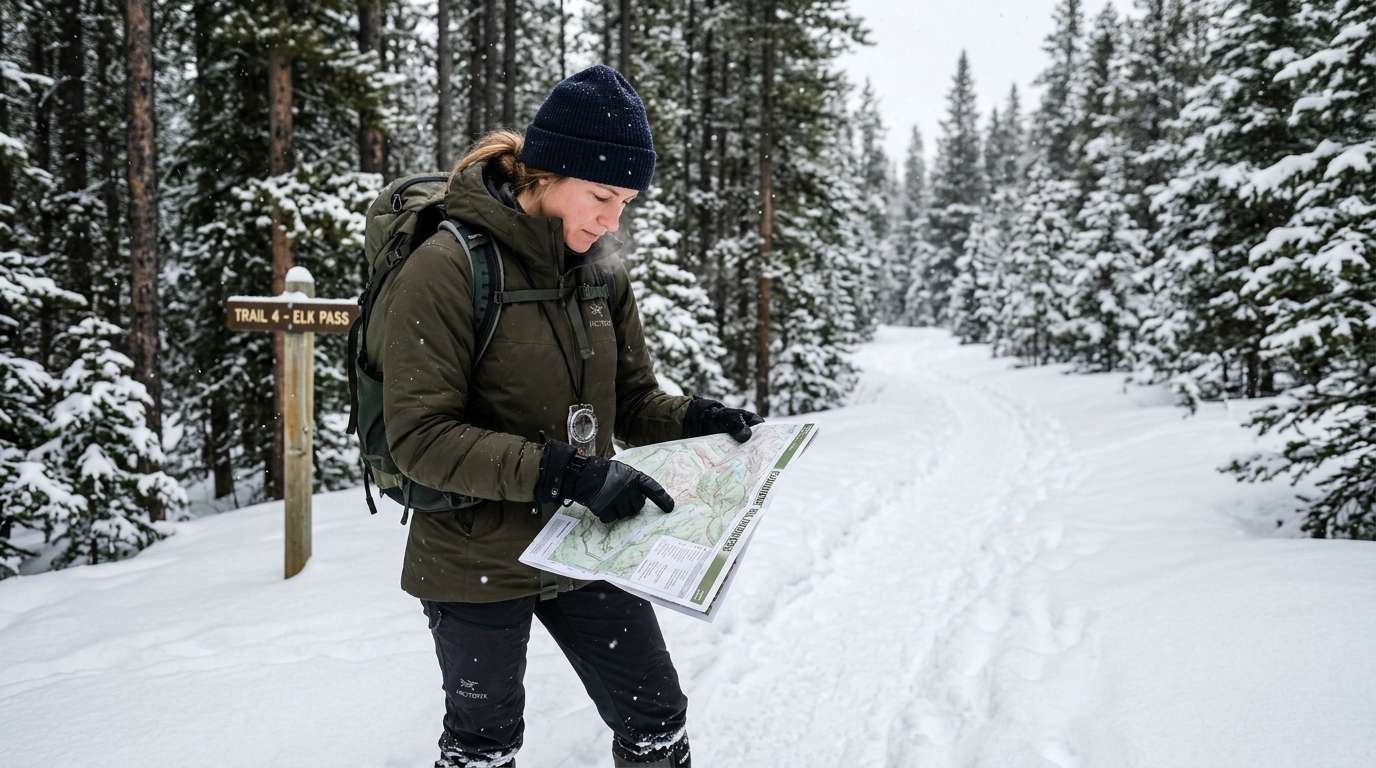
When I completed my formal navigation training — map-and-compass micro-navigation used by professional expedition teams — the instructor described good navigation as ‘reading a system that doesn’t lie.’ Every contour line, every water feature, every slope aspect is a data point. The terrain tells you exactly where you are, if you know how to read it.
For professionals who work with data, this framing changes everything. Navigation stops being an intimidating backcountry skill and becomes an information-processing challenge. You’re cross-referencing your map against terrain features, maintaining a mental model of your position, and adjusting your decision-making as new data comes in. It’s no different from updating a project plan against real-world progress.
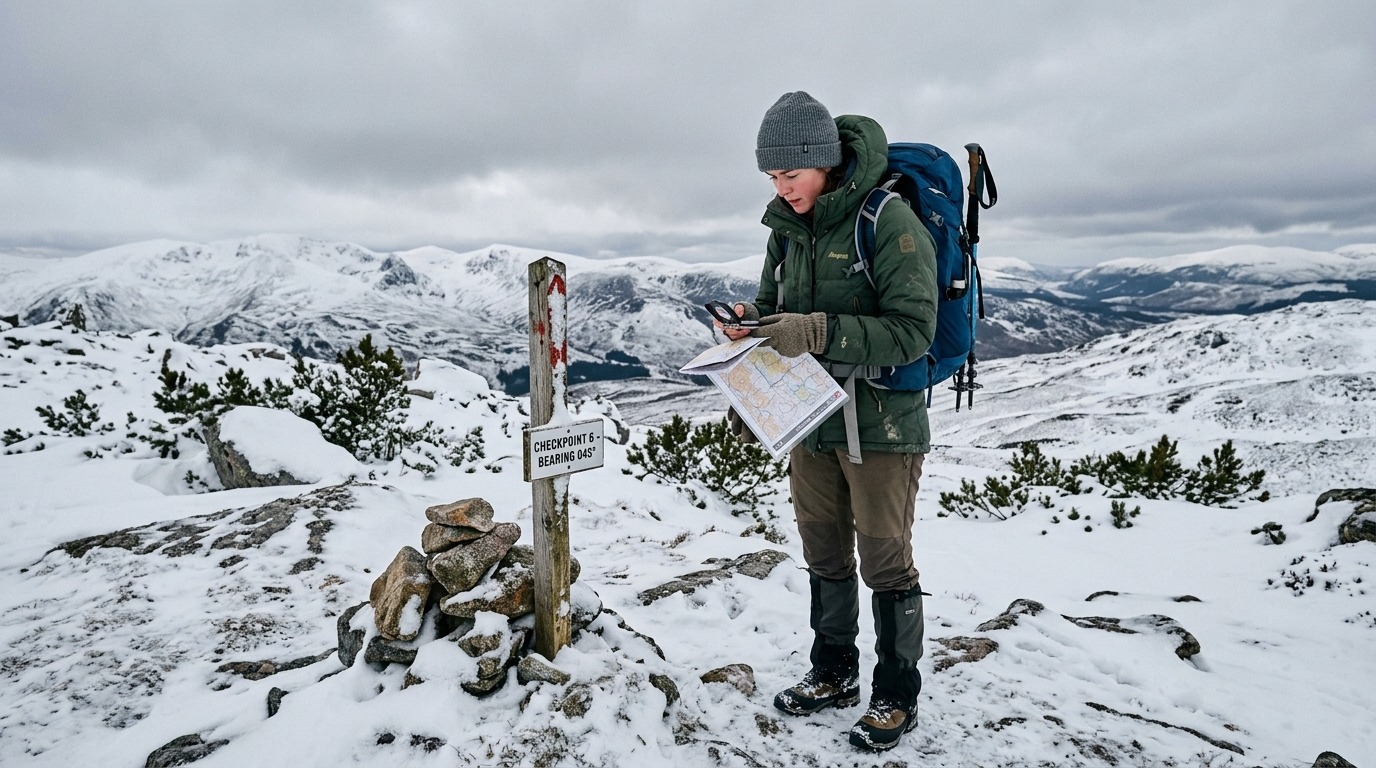
On a guided expedition along the Yukon River, one of the group was a financial analyst navigate a section of river that had confused one outdoor guide. She didn’t panic. She sat down, looked at the map, identified two reference points on the opposite bank, and triangulated her position in about ninety seconds. She’d been in a canoe three times in her life. She’d been reading data and drawing conclusions from it for twenty years.
Key takeaway: Wilderness navigation rewards the same skills that make you effective at data analysis. Trust the information in front of you, work your process, and resist the urge to go on feel.
3. Cold-Weather and Thermal Management: Systematic Layering as Equipment Protocol
Cold-weather survival is where I see the biggest gap between what people think they know and what actually works. Having operated through Northwest Territories winters — from November through April, regularly at -30°C to -40°C — I can tell you that thermal management is one of the most technical skill areas in wilderness preparedness, and one of the most teachable.
The Northern Layering System I teach is built on a simple premise: your body is a heat-generating system, and your clothing is thermal management equipment. Every layer has a function. Base layer: moisture management. Mid layer: insulation. Outer layer: wind and precipitation protection. The system works when every component does its job and the interaction between layers is managed correctly.
For analytical thinkers, this framing immediately converts an intimidating cold-weather scenario into a familiar challenge: equipment system optimisation. The question isn’t ‘will I be warm enough?’ — it’s ‘is my equipment system configured correctly for the current and forecast conditions?’
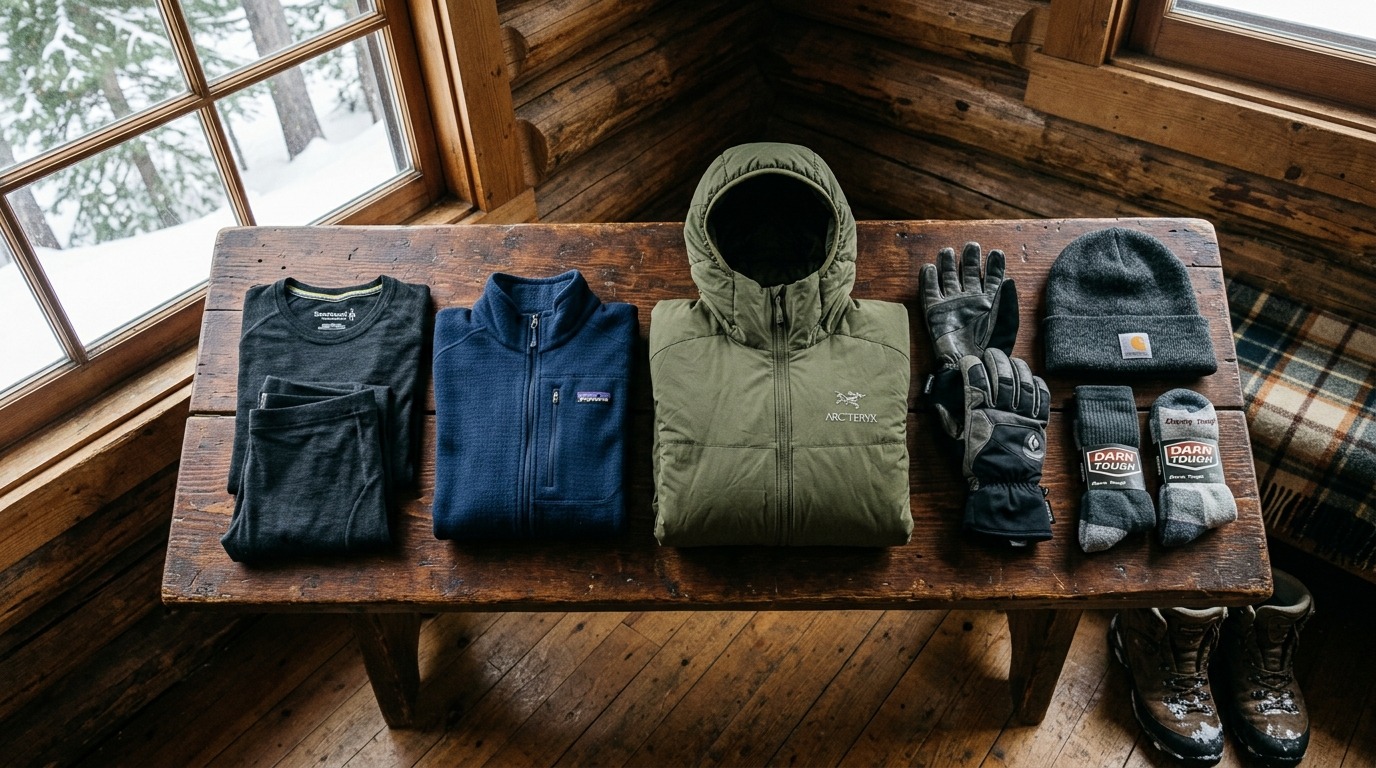
I’ve been at a cold-weather camp below -20°C where professionals with no prior winter camping experience were comfortable and functional within the first two hours — because they applied engineering thinking to their equipment setup. They checked their systems, identified gaps, and adjusted. No one had to tell them to. That’s what analytical thinkers do.
Key takeaway: Cold-weather survival is systems management. Approach your gear configuration the way you’d approach any equipment protocol: with precision, pre-use verification, and a plan for contingencies.
Why Training at 68°N Produces a Different Standard
Most wilderness survival content is developed in temperate environments, where the margin for error is wider, the conditions are more forgiving, and the consequences of knowledge gaps are less immediate. The Northwest Territories, and specifically the area around Inuvik at 68 degrees north, operates at a different standard.
At 68°N, temperatures drop to -42°C. Then there’s wind chill on top of that. Daylight disappears for weeks. The isolation is real — not the kind of isolation where a trail leads back to a parking lot, but the kind where a poor decision has consequences that unfold over hours, not minutes. Rescue is slow. Communication is limited. Your preparation is the only variable you control.
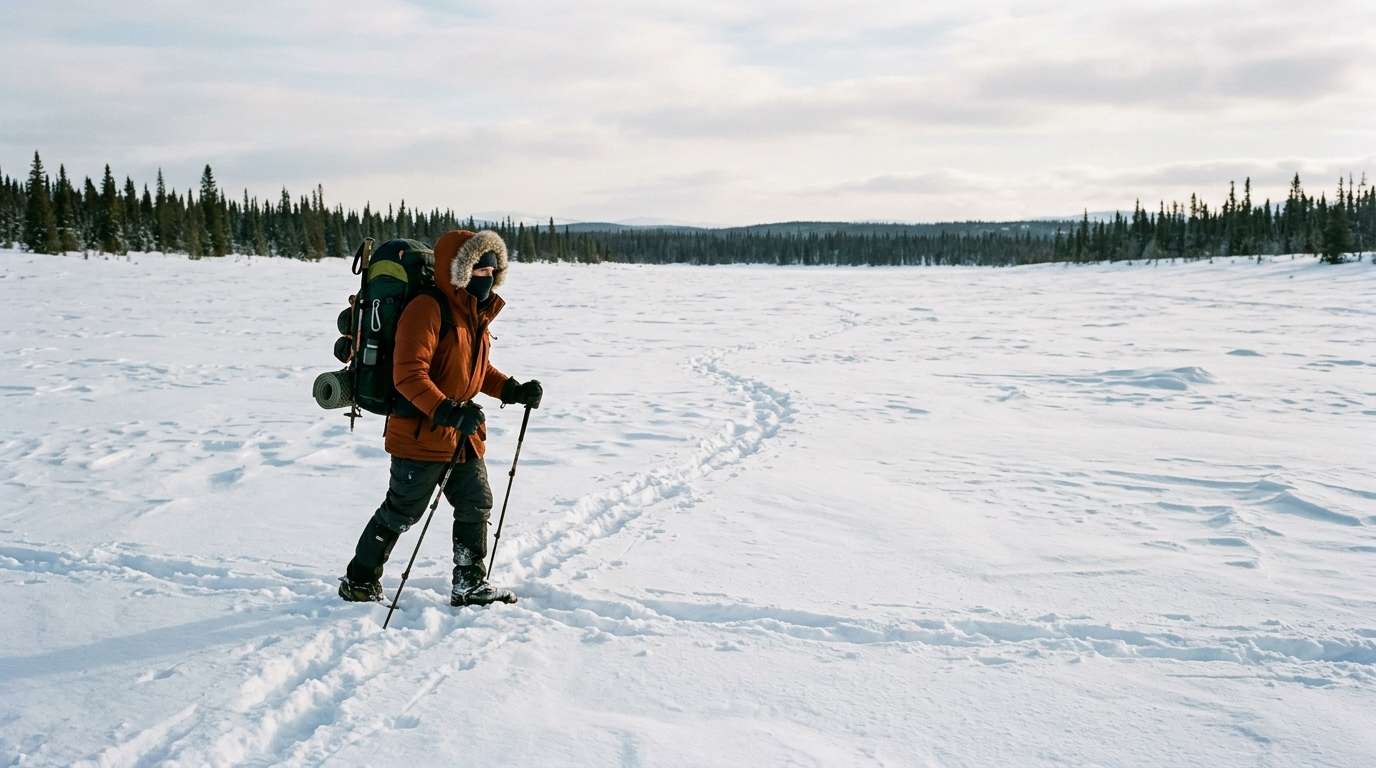
Five years of emergency response work in that environment, combined with decades of personal field operations, shaped my teaching approach in one fundamental way: I don’t teach worst-case scenarios to frighten people. I teach best-case preparation to eliminate unnecessary risk. The professionals who work effectively in extreme northern environments aren’t braver than anyone else. They’re better prepared.
For corporate professionals this context provides two things: a proof of concept that systematic preparation works under the most demanding conditions, and a credible source for frameworks that have been tested where it actually matters. When I teach a thermal management protocol, it’s been field-verified at -40°C. When I teach a navigation system, it’s been used in conditions where losing orientation has real consequences.
You don’t need to go to the Arctic to benefit from training that was developed there. But you should understand why the source of your training methodology matters — and choose accordingly.
A Framework for Getting Started: Building on What You Already Have
If you’re a professional who has read this far, you already have the most important thing: you’re approaching this the way you approach any competency gap. Systematically, with an intention to understand it properly.
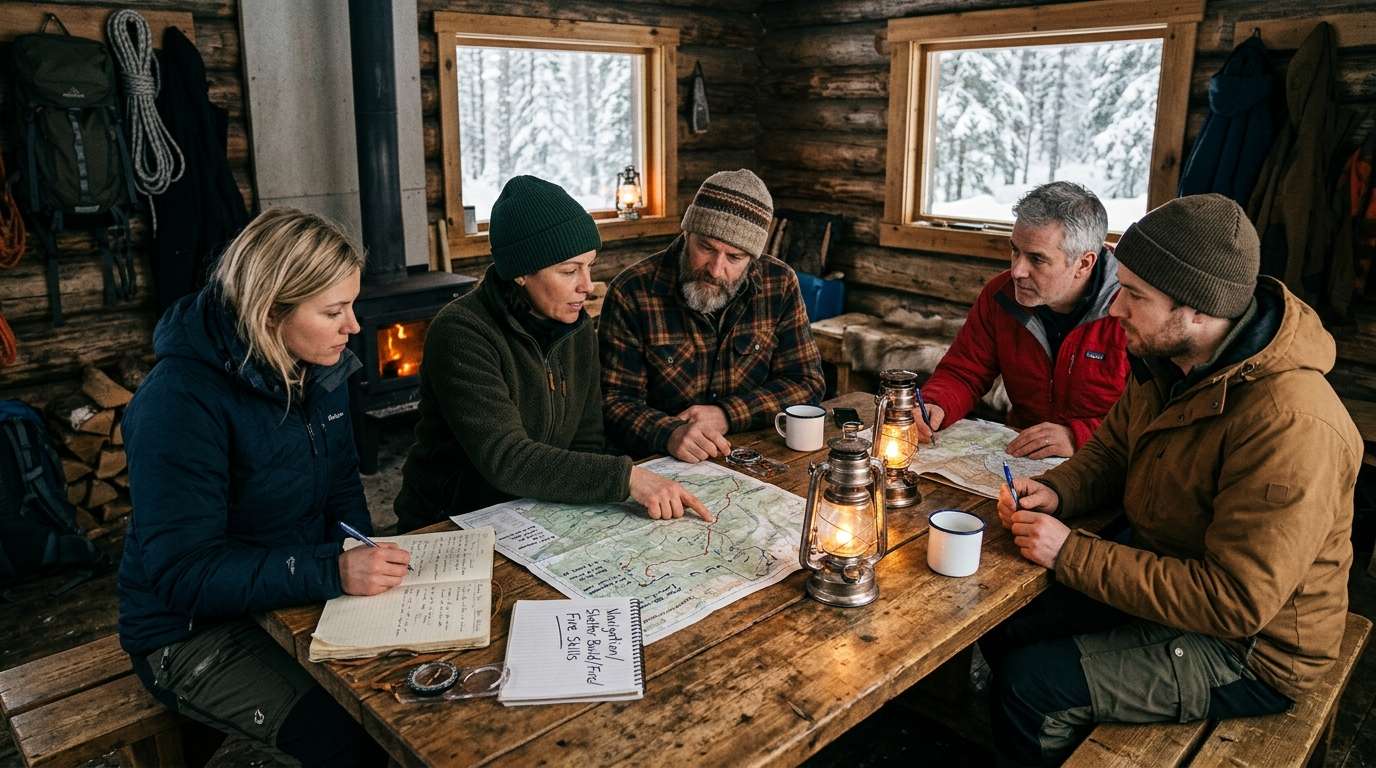
Here’s the progression I recommend for analytical thinkers building wilderness readiness:
- Phase 1 — Framework First: Before you buy gear or plan a trip, build the mental framework. Learn wilderness risk assessment, the ABCD first aid protocol, and the fundamentals of map-and-compass navigation. These are the cognitive tools that everything else plugs into. They’re also the areas where your professional background gives you the fastest learning curve.
- Phase 2 — Gear as Equipment: Approach your kit the same way you’d evaluate any professional equipment investment. Specification-first, function-led, quality-prioritised. Avoid the trap of buying on brand recognition or aesthetic appeal. Understand what each piece of equipment does in your system and why it’s there.
- Phase 3 — Controlled Field Application: Take your frameworks into the field deliberately, not casually. Start with day hikes where you practise navigation without GPS. Progress to overnight camps where you manage your thermal system through a full temperature cycle. Each outing should have a specific skill you’re testing and a debrief you’re conducting afterward. This is how professionals develop competency in any domain.
The goal isn’t to become a survivalist. It’s to become someone who can operate safely and confidently in wilderness environments — who understands the risks, has the skills to manage them, and brings the same rigour to the outdoors that they bring to the rest of their professional life. That’s what WildSurvival101 is built to deliver.
You already have the mindset. Here’s how to build the skills.
“In the field, preparation isn’t a precaution — it’s a professional standard.”
— Ian Flood, WildSurvival101