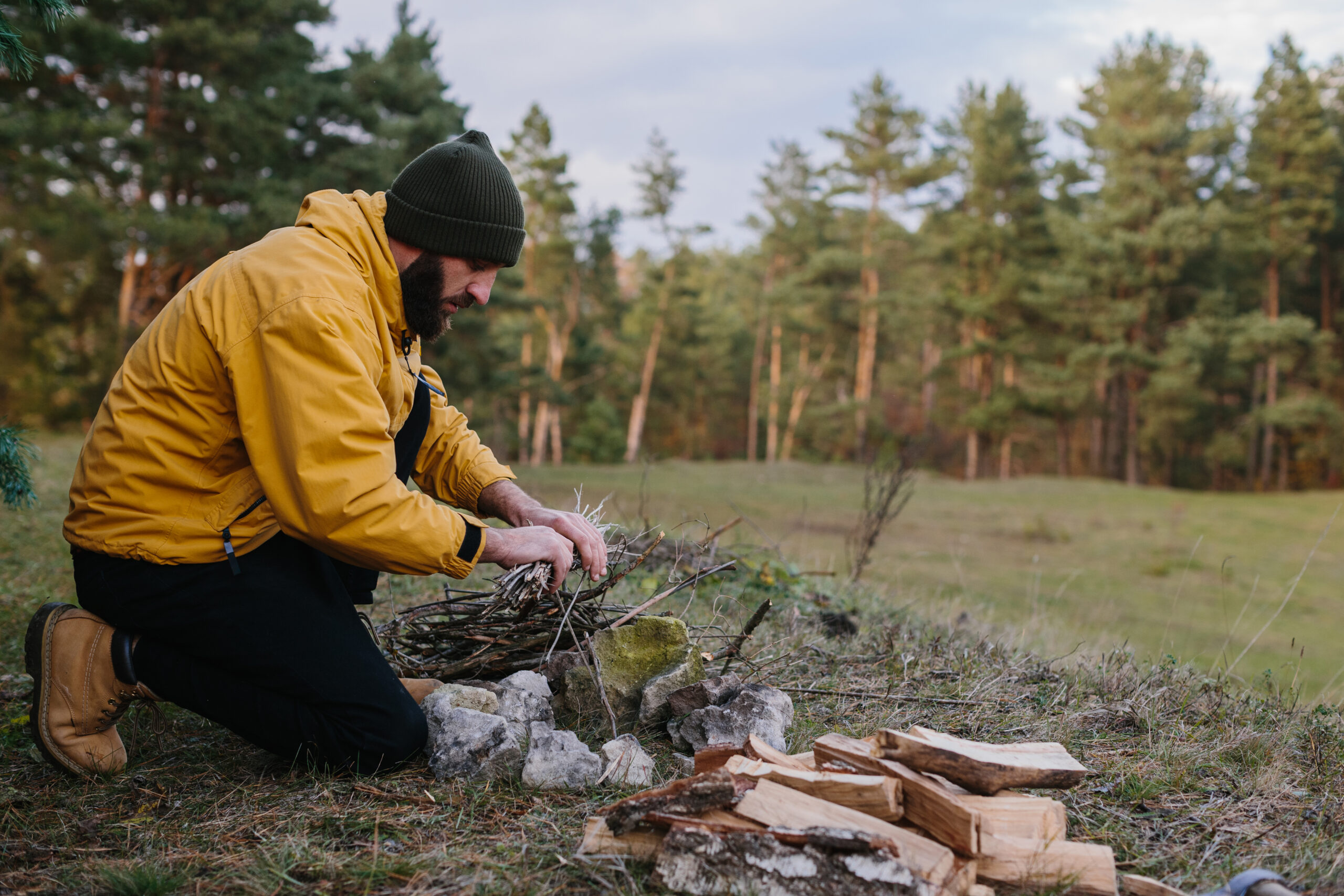
The foundations of my outdoor knowledge were built in the Scouts, where six of us would share a big canvas tent during annual summer camps. Those early days shaped my understanding of basic outdoor skills – from setting up large tents and mastering essential knots to perfecting campfire cooking. Learning primitive survival skills became the cornerstone of my wilderness education. Each new skill earned us cloth badges, symbols of our growing outdoor expertise that decorated our green scout shirts.
These foundations sparked something deeper in me. The satisfaction of mastering each new outdoor technique, the camaraderie of working together with my patrol, and the thrill of each successful camping trip built my confidence. Through team games and day hikes, we learned not just survival skills, but the true spirit of outdoor adventure.
As I grew older, these early lessons evolved into more advanced outdoor pursuits. I found myself drawn to weekend camping trips and mountain hiking, each experience building upon the skills I’d learned in Scouts. The basics of camp craft expanded into more complex survival techniques, and my appreciation for nature’s resources grew with each new adventure.
Learning to See the Forest Differently
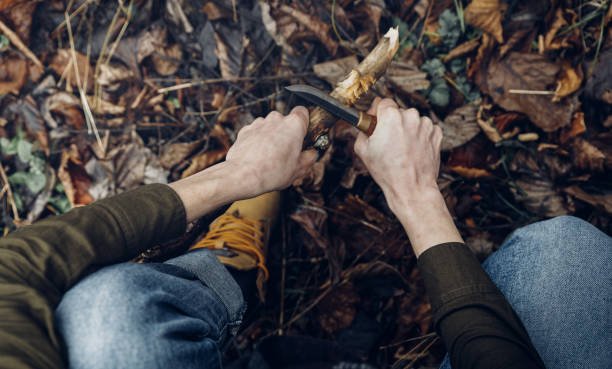
When I look at a forest now, I don’t just see trees and undergrowth. Each oak branch speaks of potential tool handles, every stone near the creek whispers possibilities of cutting edges, and fallen bark suggests natural cordage. This shift in perspective didn’t happen overnight – it came through years of practice, countless mistakes, and unexpected discoveries.
The Wood Whisperer’s First Steps
Ray Mears, the renowned British bushcraft expert, often speaks of his first attempts at woodcraft. In his early days, he too struggled with understanding wood grain and proper tool making. As he shares in his books, his first attempts at carving often resulted in split wood and broken tools. “The wood teaches you,” he often says, “if you’re willing to listen.”
Nature’s Hardware Store: Finding Your Materials
Let me share what I’ve learned about selecting materials:
Wood Selection (My Personal Guidelines)
- Dead standing wood often proves better than fallen pieces
- Look for straight grain in branches when making handles
- Test hardness by pressing your thumbnail into the wood
- Avoid wood with fungal growth or insect holes
Stone Tools
- River rocks with conchoidal fractures make excellent cutting edges
- Test potential tool stones by tapping them – clear rings suggest solid pieces
- Dark, dense stones often hold edges better than lighter ones
Making Tools That Last
Tom Brown Jr., the famous tracker and survival expert, once demonstrated the importance of patience in tool making. During one of his tracking school sessions, he spent an entire day crafting a single knife with his students. Using a carefully selected piece of hardwood and locally sourced stone, he created a tool that he still uses in demonstrations today, proving that properly made primitive tools can last for years.
This dedication to craftsmanship is also exemplified by Mors Kochanski, who documented spending over eight hours creating a survival knife during one of his workshops. The handle was crafted from a three-month-seasoned birch branch, chosen specifically for its density and grain pattern. The blade was knapped from high-quality quartzite, a material he had tested extensively in his survival schools. This knife became a teaching tool that he used for over a decade to demonstrate proper knife-making techniques to his students.
Emergency Preparedness and DIY Tools
In his book “98.6 Degrees: The Art of Keeping Your Ass Alive,” Cody Lundin recounts a powerful demonstration of primitive survival tools during a 72-hour survival challenge in the Arizona wilderness. Using only the knowledge in his head and natural materials, he created:
- A digging stick from fire-hardened oak for harvesting edible roots and tubers
- Multiple cutting tools from carefully selected river stones, demonstrating different knapping techniques
- A water container woven from birch bark using traditional Native American methods
- A shelter framework using young saplings, which he tested in both fair weather and storms
Les Stroud, during the filming of Survivorman in northern Ontario, demonstrated similar skills when his modern tools were deliberately removed from his gear. Over three days, he created an entire primitive tool kit that included:
- A bowl-burning set using hot coals and green wood
- Stone scrapers for processing materials
- Bark containers for water collection
- A complete shelter frame using only materials found in the forest
These experiences, documented in his show and books, demonstrated that knowledge of primitive tool-making isn’t just an interesting skill – it can be the difference between life and death in real survival situations.
Bug-Out Bag Integration
Now, my bug-out bag includes a mix of modern and primitive tool-making supplies:
- Small knapping tools for stone work
- Strong cordage for tool assembly
- Beeswax for strengthening bindings
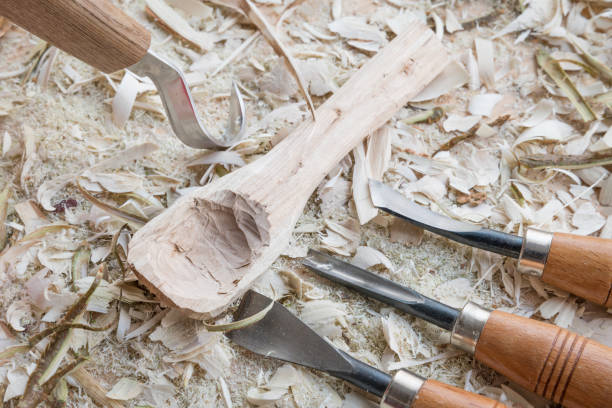
- Basic carving tools for wood shaping
- Fire-starting materials for tool hardening
Advanced Primitive Survival Skills Tool Crafting Techniques
Making a Stone Axe
Les Stroud demonstrates a methodical approach to stone tool making:
Head Selection
When selecting a stone for your axe head, look for a dense river stone with a natural wedge shape that will require minimal modification. Test each potential stone for soundness by tapping it gently—a clear ring indicates solid material without internal fractures. Always inspect carefully for visible cracks or flaws that could cause the head to break during use or shaping.
Handle Creation
For creating an effective axe handle, begin by selecting a young hardwood sapling with appropriate thickness and strength. Next, carefully steam-bend the top portion to create the perfect angle for head attachment, ensuring a secure fit and proper striking balance. Complete the handle by creating a socket through careful charring and scraping, which will house the stone head and provide the structural integrity needed for heavy use.
Assembly
During the assembly process, precisely fit your stone head into the prepared socket, ensuring it sits firmly without wobbling. Secure the head by wrapping wet rawhide around the joint—as the rawhide dries, it contracts to create an exceptionally tight grip. Finally, add a coating of pine pitch around all connection points for waterproofing and additional reinforcement, which will protect your tool from moisture and extend its useful life.
Crafting a Reliable Spear
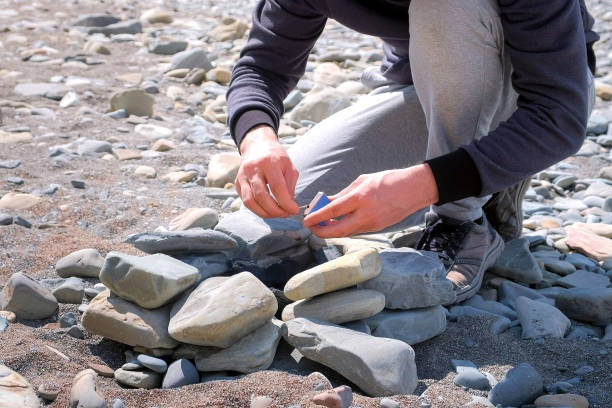
Dave Canterbury, wilderness expert, shares his spear-making methodology:
Shaft Selection
When selecting a shaft for your spear, Canterbury recommends using young straight saplings as they provide the ideal combination of strength and workability. Before committing to a particular sapling, test its flexibility by bending it gently to ensure it can withstand pressure without snapping. Once you’ve chosen your shaft, carefully remove the bark using a scraping tool to create a smooth surface that’s comfortable to handle and less prone to splintering.
Point Creation
The effectiveness of your spear depends largely on its point. Begin by gradually fire-hardening the tip, rotating it near flames to slowly char and harden the wood without burning it through. Using stone tools, shape the hardened tip to create a sharp, penetrating point suitable for hunting or self-defense. For fishing applications, consider creating barbs by making angled cuts near the tip that will help secure your catch once speared.
Reinforcement
To ensure your spear remains durable under stress, add hardwood splints along potential breaking points, particularly where the shaft meets the point. Secure these reinforcements by binding them tightly with natural cordage made from plant fibers, sinew, or inner bark. Complete the construction by sealing all bindings with pine pitch, which not only waterproofs the spear but also provides additional structural integrity that will extend the tool’s usable life in wilderness conditions.
Urban Applications
Urban survival expert Cody Lundin demonstrates that primitive skills have modern applications. During his workshops, he teaches participants to create emergency cooking utensils from found materials, enabling food preparation during power outages or emergencies. Attendees learn temporary shelter repairs using natural materials, providing solutions for unexpected housing damage. Lundin also covers creating water filters from layered natural materials for emergency water purification, along with crafting basic tools for home repairs when conventional tools aren’t available.
Practical Workshop Setup
Natural Materials Section
A well-organized primitive skills workshop should include a natural materials section containing dried woods of various species to demonstrate different working properties and applications. Complement this with a collection of stones and minerals suitable for tool making, cutting, and grinding. Stock natural cordage materials such as yucca, nettle, and inner bark for binding demonstrations, alongside plant fibers specifically selected for their binding properties in tool creation and repair projects.
Modern Support Tools
To facilitate learning primitive skills, maintain a selection of basic carving tools that help beginners develop techniques before attempting stone tool creation. Include reliable fire starting equipment for demonstrations of hardening and shaping techniques that require controlled heat. Keep water containers available for soaking materials that need to be pliable before working, and provide a sturdy, comfortable work surface for tool creation that allows students to focus on developing their skills rather than struggling with their working environment.
Teaching Others: Lessons Learned
Through my volunteer work with emergency services and outdoor activities, I’ve discovered key principles for developing wilderness skills:
Build Core Skills
- Master basic first aid techniques
- Learn essential camping skills
- Practice fundamental navigation
Practice Regularly
- Train in both summer and winter conditions
- Keep emergency response skills fresh
- Participate in team training exercises
Build Confidence
- Start with guided trips and instruction
- Test skills in controlled environments
- Learn from each experience in the field
Seasonal Considerations
Each season offers unique opportunities for tool crafting:
Spring
- Gathering bark when sap flows
- Collecting flexible young shoots
- Finding new growth for tool handles
Summer
- Harvesting grasses for cordage
- Testing tools in good weather
- Teaching outdoor workshops
Fall
- Collecting seed pods for containers
- Gathering late-season materials
- Preparing winter storage
Winter
- Working with seasoned woods
- Indoor tool maintenance
- Planning spring projects
Looking Forward: The Future of Primitive Skills
As our world grows more digital, these ancient skills become more valuable. They connect us to our roots and prepare us for uncertainty. The work of modern survivalists and bushcraft experts proves these skills remain relevant and life-saving.
Documenting these skills for future generations is important so that traditional knowledge combined with modern understanding is understood. This isn’t just about survival – it’s about maintaining our connection to the natural world.
Wisdom Carved by Nature
The outdoors continues to teach me something new every day. From those early Scout camps to my current adventures, each experience has built upon the last. Whether it’s practicing winter camping skills or preparing my Bug Out Bag for different scenarios, I never stop learning.
One of the most valuable lessons I’ve learned is that wilderness skills are best preserved through sharing and community. Every instructor I’ve met, from Scout leaders to survival experts, emphasizes this truth: these ancient skills survive because each generation takes responsibility for passing them on. The techniques I learned aren’t just personal tools; they’re links in a chain of knowledge stretching back through human history.
For those just starting out: don’t be intimidated. Begin with the basics, like I did in Scouts. Learn one skill at a time. Test your knowledge in safe conditions. Most importantly, respect nature as your teacher. The outdoors offers endless opportunities to learn and grow—you just need to take that first step.