
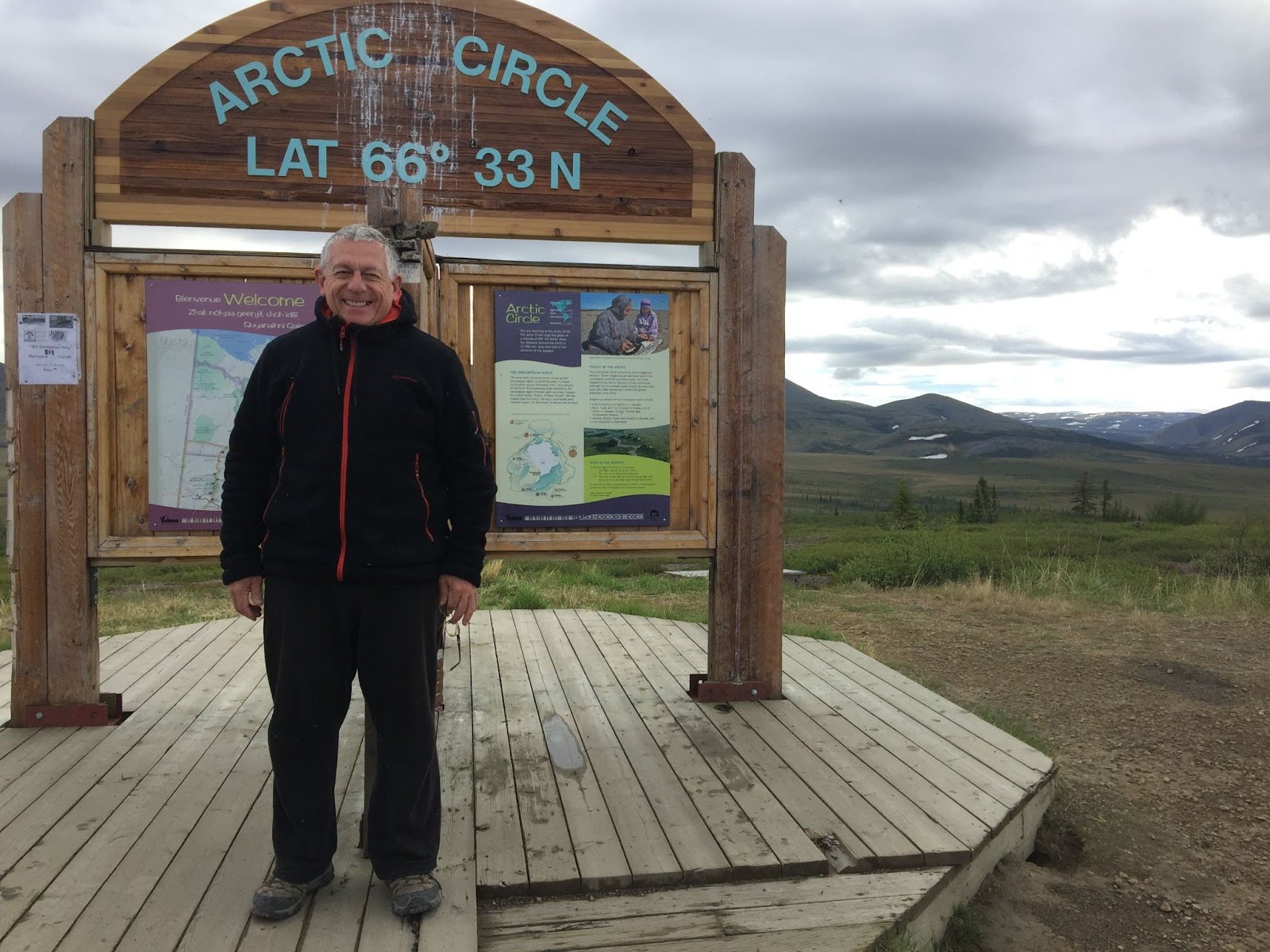
Trading London’s drizzle for Canada’s North was already a bold move. Settling in the, Northwest Territories, felt like stepping into another world—but that was just the beginning. When my work pulled me over 1,000 kilometers further north to Inuvik, past the Arctic Circle, I discovered what true northern living meant and began developing essential Arctic survival skills. Here, the sun doesn’t just rise and set—it vanishes for 30 days in winter, then refuses to set for 56 days in summer.
Friends often ask how anyone can live in such extremes, where darkness and light play by their own rules. I tell them that once you’ve watched the sun trace circles in the sky at midnight or heard the snow whisper stories in the polar night, the “normal” world seems a little less magical.

The Dance of Day and Night
Even with years of outdoor adventures under my belt, nothing quite compares to experiencing Inuvik’s long polar nights. I’d read about them, of course, but experiencing them? That’s a different game altogether. Around early December, the sun just… stops showing up. The world transforms into shades of blue and purple, like living inside a perpetual twilight.
Last Christmas, I chose to spend the holidays further south, enjoying a brief respite from the short day hours of Inuvik before returning north after New Year’s to embrace the remaining polar nights.
I still remember my first polar night. I stood outside at what my watch said was nearly noon, staring at a sky that looked like early evening. The stars were still there that late in the day and eventually faded as daylight grew stronger.
Adapting to Extreme Conditions
That first winter taught me lessons I’ll never forget. Coming from the mild UK climate to the Northwest Territories had been one thing, but Inuvik’s winter was on another level entirely. One morning in December, I woke up to -35°C and the wind chill put that past -40°C. Even breathing felt different—each inhale creating tiny ice crystals in my nose.

You know when it’s that cold as your first few breaths outside make you cough and the cold air hits the back of your throat. As an enthusiastic wilderness guide with several years of backcountry navigation and Arctic survival skills training, I was well-versed in winter techniques and proper gear, but Inuvik’s extreme conditions pushed my knowledge to new limits. The intensity of the cold here demanded a whole new level of respect, where even a 20-minute walk required strategic planning and careful attention to changing weather conditions.
What amazed me most wasn’t just the cold but how the community had adapted to these extremes, turning survival skills into an art form. They’d learned to read the wind’s patterns, predict temperature drops from subtle weather changes, and create opportunities for life to flourish even in the harshest conditions. My outdoor experience gave me a foundation, but Inuvik taught me to elevate those skills into a way of life.
Finding Light in the Darkness
We don’t just survive here; we’ve learned to thrive. In the darkest times of winter, the community draws closer together. The shared traditions and gatherings create bonds that nourish our souls.
Every January, something magical happens. The town comes together for what they call the Sunrise Festival. After weeks no sun, residents gather to welcome back the sun. Children build snow sculptures, their laughter cutting through the cold air like bells. The community shares Arctic char caught by local fishers, exchanges stories, and dances under the returning light.
Mental Wellness in the Dark
Living through polar nights requires adaptations to maintain mental health. Many residents create their own rhythms when nature doesn’t provide one. Common daily routines often include using SAD lamps in the morning, taking walks regardless of darkness, participating in community activities in the evening, and engaging in creative projects throughout the day to stay mentally active.
Art plays a significant role for many residents. Some learn traditional beadwork from local artists, finding that each carefully placed bead helps focus their minds on beauty rather than the darkness outside. Their beaded creations often become visual diaries of their dark-month experiences.

Summer’s Sweet Revenge
Then summer comes, and boy, does it make up for winter! For about 56 days, the sun doesn’t set. At all. My first midnight sun experience felt like stepping into another world. Kids playing soccer at midnight, families having picnics at 11 PM—time loses meaning when the sun refuses to sleep.
I’ve learned to garden under the midnight sun, growing vegetables in the endless light. My small plot yields surprisingly bountiful harvests—nature’s way of compensating for the winter months. Last summer, I grew kale, radishes, and even potatoes. The continuous sunlight makes things grow at an incredible pace.
Seasonal Preparation: A Year-Round Dance
Spring (March-May)
- Ice fishing before the thaw
- Checking and repairing winter gear
- Starting indoor seedlings
- Learning traditional spring hunting practices
Summer (June-August)
- Midnight sun gardening
- Berry picking expeditions
- Fish smoking and preserving
- Building up wood supplies

Fall (September-November)
- Final harvests
- Weather-proofing homes
- Stocking up on supplies
- Community preparation meetings
Winter (December-February)
- Indoor skill-sharing workshops
- Traditional crafting circles
- Community feasts
- Snow shelter building practice
Survival Skills I Never Knew I Needed
Living here has taught me Arctic survival skills I never imagined learning. Let me share some game-changing lessons
Fire Making in Arctic Conditions
My first attempt at building a fire in -40°C weather was humbling. Now I know tricks that work: finding dry birch bark even under snow, creating windbreaks that keep flames alive, keeping tinder dry in all conditions, and using different fire-starting methods depending on weather.
Shelter Building
Last Christmas, I had the chance to make a quinzee outside our home. These traditional snow shelters are designed to protect against fierce winds. When properly built by experienced practitioners, quinzees can take anywhere from two to six hours to construct, depending on skill level and conditions. Local elders often pass down these vital snow shelter-building techniques to preserve this essential survival knowledge.
Food and Water
Living here means thinking differently about food and water. I’ve learned ice fishing techniques from local experts, identifying edible plants during the brief growing season, preserving food for long winter months, and making water safe in extreme conditions.
Traditional Knowledge Integration
The Indigenous communities here have opened my eyes to a deeper understanding of survival. They taught me reading weather patterns through cloud formations, understanding animal behavior as weather indicators, using local plants for medicine, and traditional food preservation methods.

Community Resources and Activities
In Arctic communities, various communal activities and support systems help residents adapt to extended dark periods. These often include group meal preparation and sharing, educational workshops for skill development, support networks for seasonal adjustment, and cultural and traditional craft activities.
Real-Life Applications
These survival skills are crucial during extreme weather events, such as power outages in -35°C conditions. Key actions to take during such emergencies include building snow walls for wind protection, implementing safe indoor heating methods, participating in community resource sharing, and utilizing preserved food stored properly.
Embracing Nature’s Rhythm
I’ve stopped fighting the extremes. Instead, I flow with them. Winter days of long dark nights become a time for introspection, crafting, and strengthening community bonds. Light months overflow with activity, outdoor adventures, and gathering nature’s bounty.
The Indigenous people here taught me about living in harmony with these cycles. Their stories about light and darkness carry wisdom accumulated over generations. They don’t see darkness as something to endure but as part of life’s natural rhythm.

The Arctic Light Show
The photos I’ve captured here tell stories words can’t fully express. The first time I witnessed a winter sunset in Inuvik, I stood mesmerized by the ethereal scene—sparse black spruce trees standing like sentinels against a pastel sky, their snow-laden branches reaching toward ribbons of orange, pink, and purple light. The snow blanket stretched endlessly toward the horizon, untouched and pristine. These moments make you forget about the -40°C temperatures biting at your cheeks.
What surprises many people is how our winter sun behaves. I took a photo that maps out our unique solar pattern during the brief winter days—sunrise at 12:40 PM, reaching its peak (what we call apex) at 1:39 PM, then setting by 2:52 PM. That’s right—our entire day of sunlight lasts just over two hours in early January!
The aerial view shows our town nestled along the frozen Mackenzie River, looking like a small outpost of warmth and life amid the vast white wilderness. Each building represents a pocket of community, of shared warmth and resilience against the elements.
What surprises many people is how our winter sun behaves. I took a photo that maps out our unique solar pattern during the brief winter days—sunrise at 12:40 PM, reaching its peak (what we call apex) at 1:39 PM, then setting by 2:52 PM. That’s right—our entire day of sunlight lasts just over two hours in early January!
The aerial view shows our town nestled along the frozen Mackenzie River, looking like a small outpost of warmth and life amid the vast white wilderness. Each building represents a pocket of community, of shared warmth and resilience against the elements.

Living Between Light and Dark
Life in the Arctic demands more than mere survival—it requires a profound understanding of both cutting-edge modern techniques and time-tested traditional wisdom. Inuvik stands as a testament to human adaptability, where extreme environmental challenges forge resilient communities. In this unforgiving landscape, where temperatures plummet and darkness reigns for weeks, knowledge becomes the bridge between survival and mastery.
Nature’s raw magnificence teaches unmistakable lessons: darkness and cold aren’t obstacles to overcome but forces to respect and understand. Indigenous peoples have crafted sophisticated knowledge systems that reveal the intricate balance between human existence and natural cycles. Their deep understanding of the land continues to illuminate the path for those willing to learn.
For anyone drawn to Arctic living or wilderness mastery, the journey begins with humility and grows through experience. Developing proper Arctic survival skills isn’t measured by conquest but by adaptation. Whether facing polar nights or endless summer days, the fundamental truth remains: the Arctic doesn’t bend to human will—instead, it transforms those who learn to move in harmony with its rhythms.
What’s your next step in building your survival skills? Start today—the journey of a thousand miles begins with a single step under the sun… or stars.
